 ChipApex | Global Electronic Components Supplier

SEARCH
Search Product
Search Post
— IC芯片 | 连接器 | 传感器 | 被动器件 —
Search productSearch post
— IC芯片 | 连接器 | 传感器 | 被动器件 —
Consult the customer manager about the wholesale price.
consultation hotline:86-132-6715-2157
email:[email protected]
Contact the product manager for consultation. One-stop consultation is available.
Do you want a lower wholesale price? Please send us your inquiry and we will reply immediately.
The PS2532-1-A is a single-channel transistor output optocoupler manufactured by CEL. It features an NPN phototransistor Darlington pair output configuration housed in a standard 4-pin DIP package for through-hole mounting. The device provides high isolation capability with a rated insulation voltage of 5000 Vrms between the input and output circuits. Key electrical parameters include a maximum collector-emitter saturation voltage of 1 V, a power dissipation rating of 300 mW, and a typical current transfer ratio of 6500%. It operates within a temperature range of -55°C to +100°C.
Verify component authenticity against official CEL datasheets due to market availability variations. Confirm that the specific suffix matches the required pinout and electrical characteristics. Check for RoHS compliance status as indicated in official documentation. Ensure the package type aligns with existing PCB footprints. Validate operating temperature ranges against application requirements before integration.
Select this component when high gain is required from a single channel without external amplification. The Darlington output offers superior drive capability compared to standard phototransistors. Consider the thermal management requirements given the 300 mW power dissipation limit. Ensure the input forward current remains within specified limits to maintain optimal current transfer ratio. Verify that the 5000 Vrms isolation meets safety standards for the target application environment.
This part belongs to the PS2532 series of optocouplers designed for general-purpose isolation applications. The series is characterized by its use of a Darlington output stage to achieve high current transfer ratios. It serves as a bridge between low-power control logic and higher-power load circuits while maintaining electrical safety separation.
Cross-reference with PS2532L-1-A for potential functional equivalents. Verify pin compatibility and electrical parameter overlaps before substitution. Ensure replacement parts meet the same isolation voltage and package requirements.
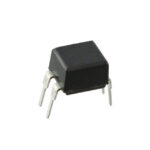 PS2532-1-A

The activity of extra discounts on wholesale prices is in full swing…
Please fill in your contact information and we will send you the latest wholesale price list.





