 ChipApex | Global Electronic Components Supplier

SEARCH
Search Product
Search Post
— IC芯片 | 连接器 | 传感器 | 被动器件 —
Search productSearch post
— IC芯片 | 连接器 | 传感器 | 被动器件 —
Consult the customer manager about the wholesale price.
consultation hotline:86-132-6715-2157
email:[email protected]
Contact the product manager for consultation. One-stop consultation is available.
Do you want a lower wholesale price? Please send us your inquiry and we will reply immediately.
The PS2561-1-V-A is a single-channel transistor output optocoupler manufactured by Renesas Electronics. It integrates a Gallium Arsenide (GaAs) infrared emitting diode and an NPN silicon phototransistor within a plastic DIP-4 package designed for through-hole mounting. The device provides high isolation voltage of 5000 Vrms between input and output circuits. Key electrical parameters include a maximum collector-emitter voltage of 80 V, a maximum collector current of 50 mA, and a forward current rating of 80 mA. The typical rise time is specified as 3 µs.
This component is designated as Not Recommended for New Designs (NRND). Procurement should be limited to existing production runs or replacement needs only. Verify end-of-life status with the manufacturer before committing to new projects. Availability may be restricted as Renesas transitions to newer product variants within the PS2561 family.
Select this part for legacy designs requiring a standard DIP-4 transistor output optocoupler with 5000 Vrms isolation. Ensure the application operates within the 80 V collector-emitter voltage limit and 50 mA maximum collector current. Consider the NRND status when designing new equipment; alternative modern equivalents from the same family may offer better long-term supply security.
The PS2561-1-V-A belongs to the NEPOC series of transistor output optocouplers. It is part of a broader family that includes surface mount variants like the PS2561L-1 and higher-speed versions such as the PS2561F-1. The 'V' suffix typically denotes specific packaging or tape-and-reel configurations, while '-A' indicates RoHS compliance. This specific through-hole DIP variant serves as a foundational component for basic isolation tasks.
Direct pin-compatible replacements within the Renesas portfolio include the PS2561-1-F-A for faster switching applications. For surface mount implementations, the PS2561L-1-V-A offers equivalent electrical characteristics in a 4-SMD package. Cross-manufacturer substitutes require careful verification of isolation voltage and CTR specifications.
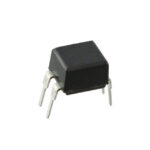 PS2561-1-V-A

The activity of extra discounts on wholesale prices is in full swing…
Please fill in your contact information and we will send you the latest wholesale price list.






