ChipApex | Global Electronic Components Supplier

SEARCH
Search Product
Search Post
— IC芯片 | 连接器 | 传感器 | 被动器件 —
Search productSearch post
— IC芯片 | 连接器 | 传感器 | 被动器件 —
Consult the customer manager about the wholesale price.
consultation hotline:86-132-6715-2157
email:[email protected]
Contact the product manager for consultation. One-stop consultation is available.
Do you want a lower wholesale price? Please send us your inquiry and we will reply immediately.
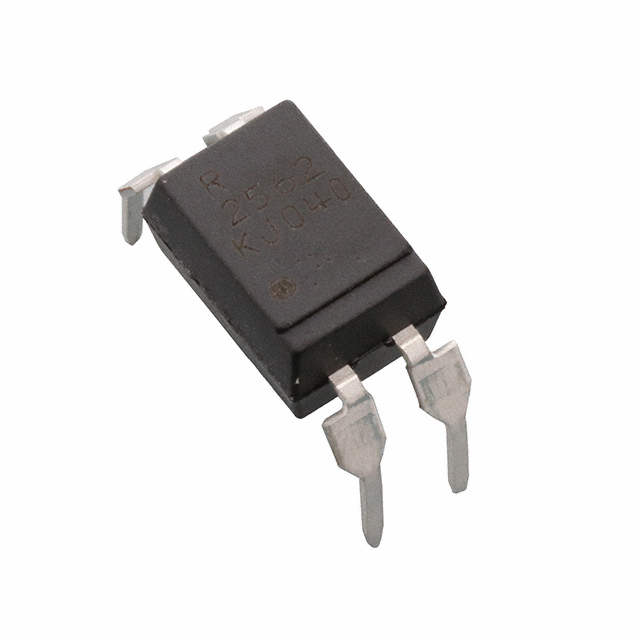
The PS2561BL1-1-D-A is a single-channel transistor output optocoupler manufactured by CEL. It integrates a GaAs infrared emitting diode and an NPN silicon phototransistor in a lead bending type package designed for surface mount applications with extended creepage distance. The device supports an operating ambient temperature range from -55 °C to 110 °C. Key electrical specifications include a minimum collector-emitter breakdown voltage of 80 V, a maximum forward current of 40 mA, and a typical current transfer ratio of 200%. It provides high isolation capability with a rated insulation voltage of 5000 Vrms.
Verify the manufacturer designation on the component marking to confirm CEL origin, as this family is also produced by Renesas and NEC. Ensure the ordering suffix matches the specific lead form and packaging requirements. Confirm RoHS compliance status if restricted substances are a constraint for the assembly process. Cross-reference the datasheet revision date to ensure parameter consistency with the production batch.
Select this component when a surface mount solution with increased creepage distance is required compared to standard DIP packages. The 80 V collector-emitter voltage rating suits low-voltage switching applications. Verify that the 40 mA maximum forward current meets the drive capabilities of the source circuit. Consider the 110 °C maximum operating temperature for high-thermal environments where standard 70 °C or 85 °C devices would fail.
This part belongs to the PS2561B/L series of photocouplers, which utilize a GaAs LED and NPN phototransistor architecture. The BL1 variant specifically denotes a lead bending type for surface mount with long creepage distance. While originally developed by NEC, the technology is licensed and manufactured by multiple vendors including CEL and Renesas, maintaining functional equivalence within the series.
The PS2561BL1-1 features a lead bending type for long creepage distance, while the PS2561BL2-1 is a gull-wing type for surface mount with long creepage distance. Both share similar electrical characteristics but differ in physical lead configuration.
Yes, the device supports high-speed switching with typical rise and fall times specified in the datasheet, making it suitable for digital signal transmission applications.
 PS2561BL1-1-D-A

The activity of extra discounts on wholesale prices is in full swing…
Please fill in your contact information and we will send you the latest wholesale price list.