ChipApex | Global Electronic Components Supplier

SEARCH
Search Product
Search Post
— IC芯片 | 连接器 | 传感器 | 被动器件 —
Search productSearch post
— IC芯片 | 连接器 | 传感器 | 被动器件 —
Consult the customer manager about the wholesale price.
consultation hotline:86-132-6715-2157
email:[email protected]
Contact the product manager for consultation. One-stop consultation is available.
Do you want a lower wholesale price? Please send us your inquiry and we will reply immediately.
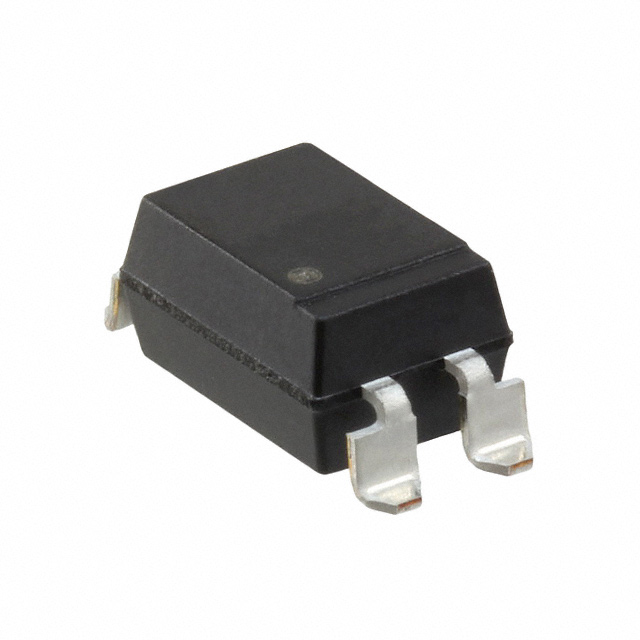
The PS2561L-1-V-D-A is a single-channel transistor output optocoupler manufactured by CEL. It integrates a Gallium Arsenide (GaAs) infrared emitting diode with an NPN silicon phototransistor to provide electrical isolation. The device features a high isolation voltage of 5000Vrms and operates within a temperature range of -55°C to +100°C. Key electrical parameters include a minimum current transfer ratio of 100% at 5mA input, a maximum reverse voltage of 6V, and power dissipation of 150mW.
Verify the specific suffix 'V-D-A' against official manufacturer documentation to confirm pinout configuration and package variant. Ensure compatibility with existing PCB footprints and thermal management requirements. Confirm availability status as component lifecycles may change. Cross-reference safety certifications such as UL or CSA if required for end-product compliance. Validate that the 5000Vrms isolation rating meets system safety standards.
Select this component when high isolation voltage and wide temperature operation are critical. The NPN phototransistor output is suitable for digital switching applications. Consider the 100% minimum CTR for reliable signal transfer at low drive currents. Evaluate the surface mount package type for automated assembly needs. Ensure the 6V reverse voltage rating aligns with collector-emitter voltage requirements in the target circuit design.
This part belongs to the PS2561 series of single-channel optocouplers. The series typically includes variants like PS2561-1 and PS2561AL-1. These devices are designed for cost-effective isolation solutions. The PS2561L-1-V-D-A specifically denotes a lead bending type package variant. The series maintains consistent core functionality across different packaging options.
Direct substitutes may include other NEC/Renesas PS2561 series variants with matching pinouts. Verify equivalent isolation voltage and current transfer ratio specifications. Check for compatible surface mount package dimensions. Ensure replacement parts maintain the same safety certification approvals for regulated applications.
 PS2561L-1-V-D-A

The activity of extra discounts on wholesale prices is in full swing…
Please fill in your contact information and we will send you the latest wholesale price list.