ChipApex | Global Electronic Components Supplier

SEARCH
Search Product
Search Post
— IC芯片 | 连接器 | 传感器 | 被动器件 —
Search productSearch post
— IC芯片 | 连接器 | 传感器 | 被动器件 —
Consult the customer manager about the wholesale price.
consultation hotline:86-132-6715-2157
email:[email protected]
Contact the product manager for consultation. One-stop consultation is available.
Do you want a lower wholesale price? Please send us your inquiry and we will reply immediately.
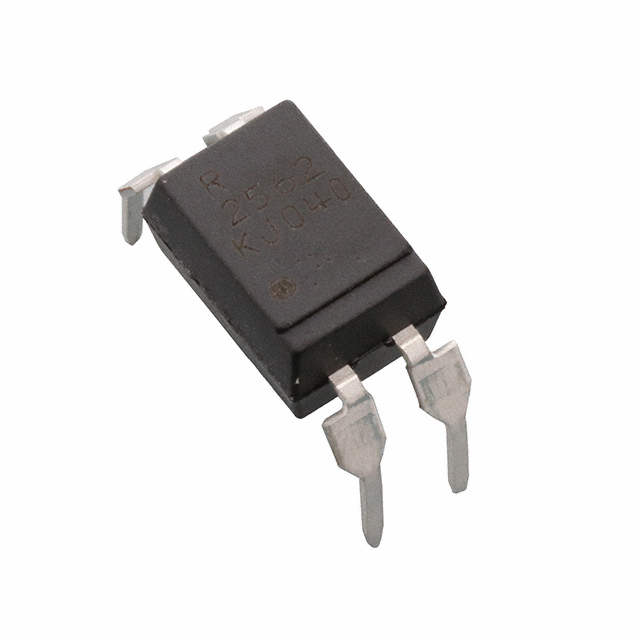
The PS2561L1-1-V-A is a single-channel transistor output optocoupler manufactured by CEL. It integrates a GaAs infrared emitting diode and an NPN silicon phototransistor within a four-pin surface-mount package featuring gull-wing leads (L1 type). The device provides high isolation voltage of 5000 Vrms between input and output circuits. Key electrical parameters include a maximum collector-emitter voltage of 80 V, a maximum collector current of 50 mA, and a typical current transfer ratio of 200%. It operates within a temperature range of -55°C to +100°C.
Verify the manufacturer designation on the component marking, as this part number is associated with both CEL and Renesas Electronics due to historical lineage. Confirm the specific suffix 'V' indicates the required safety certification status and lead configuration. Ensure the ordering documentation explicitly references the L1 package style to distinguish it from other variants in the PS2561 series. Cross-reference the datasheet version to confirm compliance with current RoHS directives.
Select this component when a surface-mount solution is required for single-channel isolation with high voltage withstand capabilities. The L1 package facilitates PCB space optimization compared to through-hole DIP options. Consider the 80 V collector-emitter voltage rating for low-voltage switching applications. Verify that the operating temperature range up to 100°C meets the thermal requirements of the target enclosure or environment.
This component belongs to the PS2561 series of high-isolation voltage optocouplers originally developed by NEC and now produced by CEL and Renesas. The series is characterized by its use of GaAs LEDs for high efficiency and reliability. The L1 variant specifically denotes the surface-mount package with bent leads, offering a compact footprint suitable for modern electronic assemblies requiring robust electrical isolation.
PS2561AL2-1-E3-A-L is a documented surface-mount equivalent in the same family. Verify pinout compatibility and package dimensions before substitution. Check if the replacement part meets the specific insulation and creepage distance requirements of the original design.
 PS2561L1-1-V-A

The activity of extra discounts on wholesale prices is in full swing…
Please fill in your contact information and we will send you the latest wholesale price list.