ChipApex | Global Electronic Components Supplier

SEARCH
Search Product
Search Post
— IC芯片 | 连接器 | 传感器 | 被动器件 —
Search productSearch post
— IC芯片 | 连接器 | 传感器 | 被动器件 —
Consult the customer manager about the wholesale price.
consultation hotline:86-132-6715-2157
email:[email protected]
Contact the product manager for consultation. One-stop consultation is available.
Do you want a lower wholesale price? Please send us your inquiry and we will reply immediately.
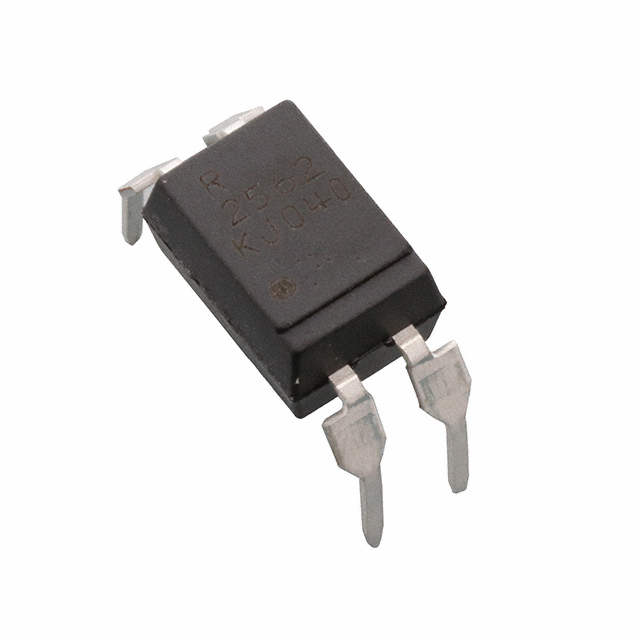
The PS2561L1-1-V-Q-A is a single-channel transistor output optocoupler manufactured by Renesas Electronics. It integrates a Gallium Arsenide (GaAs) infrared emitting diode and an NPN silicon phototransistor within a compact package. The device provides high isolation voltage of 5000 Vrms, ensuring reliable signal transmission across isolated circuits. Key electrical parameters include a maximum collector-emitter voltage of 80V, a collector current of 50mA, and a forward current of 10mA. The typical forward voltage is 1.17V, with a saturation voltage of 300mV. Switching characteristics feature a rise time of 3µs and a fall time of 5µs. The unit operates within a temperature range of -55°C to +100°C.
Verify the specific suffix Q-A against official Renesas documentation to confirm lead-free status and RoHS compliance details. Confirm availability status as distribution channels may list this component as obsolete or limited stock. Ensure the ordering part number matches the exact pin configuration and packaging type required for your PCB design. Cross-reference datasheet revisions to ensure no recent parameter changes affect your design specifications.
Select this component when high isolation voltage and moderate speed are required for single-channel applications. Compare CTR ranges if precise gain stability is critical for your circuit design. Consider the DIP-4 gull wing package dimensions for board space constraints. Evaluate thermal dissipation requirements given the 150mW power dissipation rating. Ensure input current limits align with your driving logic levels.
This part belongs to the PS2561 series of high-isolation voltage photocouplers. The series includes variants with different packages and performance grades. The L1 variant specifically denotes the DIP-4 gull wing surface mount package. This family is designed for general-purpose isolation tasks where reliability and safety standards are paramount.
Direct substitutes include PS2561L1-1-V-A and PS2561L1-1-V-D-A from Renesas. Verify pin compatibility and electrical parameters before substitution. Other manufacturers' equivalents require careful comparison of isolation voltage and CTR specifications.
 PS2561L1-1-V-Q-A

The activity of extra discounts on wholesale prices is in full swing…
Please fill in your contact information and we will send you the latest wholesale price list.