 ChipApex | Global Electronic Components Supplier
SEARCH
Search Product
Search Post
— IC芯片 | 连接器 | 传感器 | 被动器件 —
Search productSearch post
— IC芯片 | 连接器 | 传感器 | 被动器件 —
Consult the customer manager about the wholesale price.
consultation hotline:86-132-6715-2157
email:[email protected]
Contact the product manager for consultation. One-stop consultation is available.
Do you want a lower wholesale price? Please send us your inquiry and we will reply immediately.
The PS2802-4 is a high isolation voltage Darlington transistor type SSOP photocoupler. It contains a GaAs light emitting diode and an NPN silicon darlington-connected photo transistor. The device features a DC input type and provides four channels of isolation. Key electrical parameters include a maximum output voltage of 40V, a current output per channel of 100mA, and a typical forward voltage (Vf) of 1.1V. The component operates within a temperature range of -55°C to +100°C.
Verify the specific suffix (e.g., -A, -F3) against the required packaging or lead-free status, as these denote variations in tape-and-reel specifications or RoHS compliance rather than functional changes. Confirm the manufacturer source, as documentation exists from Renesas, NEC, and California Eastern Labs (CEL). Ensure the part number matches the exact pinout and package dimensions specified in the relevant datasheet before ordering.
Select this component when four isolated channels are required with high current transfer ratio capabilities provided by the Darlington output structure. Consider the 40V collector-emitter voltage rating and 100mA output current limit for load compatibility. Verify that the SSOP package fits the PCB layout constraints and that the operating temperature range meets the environmental requirements of the target application.
The PS2802-4 belongs to the PS2802 series of optically coupled isolators. This series is characterized by its use of a GaAs LED and NPN silicon Darlington photo transistor combination. The product line includes variants such as the PS2802-1 for single-channel applications and other suffixes indicating different packaging or compliance standards. It is designed for general-purpose isolation tasks where high reliability and voltage withstand are critical.
Publicly confirmed substitute part numbers are not available in the provided documentation. Variants such as PS2802-4-A and PS2802-4-F3 exist but represent packaging or compliance differences rather than direct functional substitutes from different manufacturers. Cross-referencing requires verifying pin compatibility and electrical ratings against alternative Darlington-type quad-channel optocouplers.
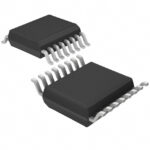 PS2802-4
The activity of extra discounts on wholesale prices is in full swing…
Please fill in your contact information and we will send you the latest wholesale price list.






