 ChipApex | Global Electronic Components Supplier
SEARCH
Search Product
Search Post
— IC芯片 | 连接器 | 传感器 | 被动器件 —
Search productSearch post
— IC芯片 | 连接器 | 传感器 | 被动器件 —
Consult the customer manager about the wholesale price.
consultation hotline:86-132-6715-2157
email:[email protected]
Contact the product manager for consultation. One-stop consultation is available.
Do you want a lower wholesale price? Please send us your inquiry and we will reply immediately.
The CEL PS2832-4 is a four-channel optocoupler housed in a 16-pin SSOP package. It features high isolation voltage and high collector-to-emitter voltage capabilities, utilizing Darlington output transistors for enhanced current transfer. The device operates within a temperature range of -55°C to +100°C, with a power dissipation rating of 120 mW and a reverse voltage specification of 6 V. Designed for robust signal transmission across isolated circuits, it provides reliable performance in industrial applications requiring multi-channel galvanic isolation.
Verify component authenticity through authorized distributors or direct manufacturer channels. Confirm the specific suffix (e.g., -V, -CEL) matches project requirements, as these may indicate variations in tape-and-reel packaging or regional compliance certifications. Check lifecycle status, as this model is listed as obsolete by some suppliers; ensure availability of sufficient stock for production needs or plan for alternative sourcing strategies.
Select this component when multi-channel isolation is required within a compact footprint. The Darlington output offers higher current transfer ratio compared to standard transistor outputs, suitable for driving loads directly. Ensure the input forward current and output voltage ratings align with the specific circuit design constraints. Consider thermal management due to the 120 mW power dissipation limit in enclosed environments.
The PS2832 series belongs to CEL's family of high-isolation voltage optocouplers. This specific model represents a quad-channel variant designed for applications needing multiple isolated signals in a single package. It complements other series like PS2831 and PS2833, offering a balance between channel count and package size for space-constrained designs.
Public confirmed substitute part numbers are not available in the provided documentation. Users should consult official replacement guides or contact CEL directly for cross-reference information regarding end-of-life components.
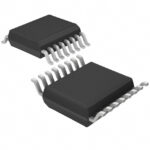 PS2832-4
The activity of extra discounts on wholesale prices is in full swing…
Please fill in your contact information and we will send you the latest wholesale price list.






