 ChipApex | Global Electronic Components Supplier
SEARCH
Search Product
Search Post
— IC芯片 | 连接器 | 传感器 | 被动器件 —
Search productSearch post
— IC芯片 | 连接器 | 传感器 | 被动器件 —
Consult the customer manager about the wholesale price.
consultation hotline:86-132-6715-2157
email:[email protected]
Contact the product manager for consultation. One-stop consultation is available.
Do you want a lower wholesale price? Please send us your inquiry and we will reply immediately.
The PS8101-V-AX is a high-speed optically coupled isolator manufactured by Renesas Electronics. It integrates a GaAlAs LED on the input side with a PIN photodiode and high-speed amplifier transistor on the output side within a single chip. This component provides one channel of isolation with a data rate of 1 Mbps. Key electrical parameters include an insulation voltage of 3750 Vrms, a maximum supply voltage of 35 V, and a forward current of 25 mA. The device operates within a temperature range of -55°C to +100°C and is housed in a lead-free plastic SO-5 package.
Verify the specific suffix designation against official Renesas documentation to confirm exact packaging and tape-and-reel specifications. Ensure compatibility with existing design constraints regarding operating temperature ranges and isolation voltage ratings. Cross-reference the manufacturer part number with authorized distributor catalogs to validate authenticity and current production status before finalizing procurement orders.
Select this component when designing circuits that require high-speed digital isolation with a compact footprint. The SO-5 package suits space-constrained layouts, while the 1 Mbps data rate supports standard industrial communication protocols. Consider the 3750 Vrms isolation rating for safety-critical applications. Verify that the required forward current and supply voltage levels align with the system's power budget and signal integrity needs.
This device belongs to the NECOP series of photocouplers from Renesas Electronics. It represents a specialized category of high-speed analog output type optocouplers designed for demanding electronic environments. The product line emphasizes reliability and speed, catering to industries where signal fidelity and electrical safety are paramount. It serves as a critical interface component in modern electronic designs.
Consult official Renesas cross-reference guides for verified substitute part numbers. Ensure any replacement maintains identical pin configurations, isolation voltages, and data rates. Validate thermal performance and package dimensions to guarantee mechanical fit without redesigning the printed circuit board layout.
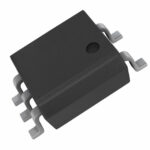 PS8101-V-AX
The activity of extra discounts on wholesale prices is in full swing…
Please fill in your contact information and we will send you the latest wholesale price list.






