ChipApex | Global Electronic Components Supplier
SEARCH
Search Product
Search Post
— IC芯片 | 连接器 | 传感器 | 被动器件 —
Search productSearch post
— IC芯片 | 连接器 | 传感器 | 被动器件 —
Consult the customer manager about the wholesale price.
consultation hotline:86-132-6715-2157
email:[email protected]
Contact the product manager for consultation. One-stop consultation is available.
Do you want a lower wholesale price? Please send us your inquiry and we will reply immediately.
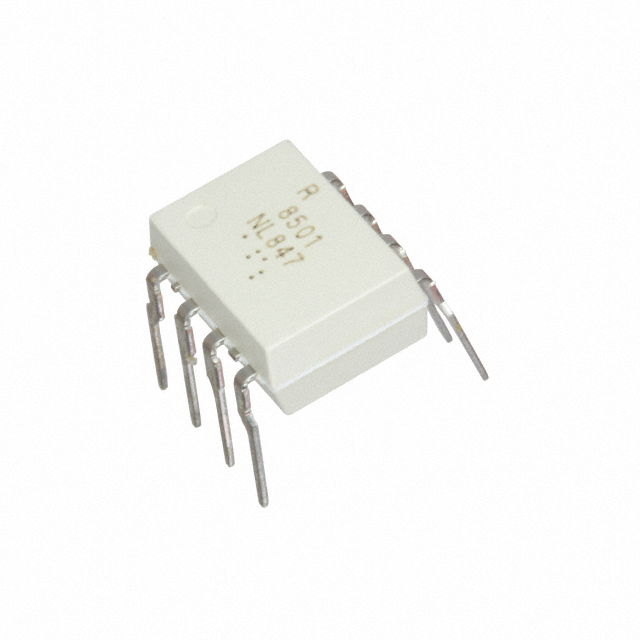
The PS8501-AX is a high-speed photocoupler from the NEPOC series manufactured by Renesas Electronics. It integrates a GaAlAs LED input with a PN photodiode and high-speed amplifier transistor output on a single chip. The device offers 5000 Vrms isolation voltage and supports data rates up to 1 Mb/s. Key electrical parameters include a typical current transfer ratio of 15% at 16 mA forward current, a maximum DC forward current of 25 mA, and an output current capability of 8 mA. It operates within a temperature range of -55°C to +100°C and features low power dissipation of 100 mW.
Verify the specific package variant (DIP or SMD) as the base model number may correspond to multiple physical forms. Confirm RoHS compliance status and lead-free specifications against the latest manufacturer datasheet. Ensure the selected suffix matches the required creepage distance and mounting style for your PCB layout. Cross-reference ordering codes with authorized distributors to avoid counterfeit components.
Select this component when high-speed isolation is required alongside moderate current drive capabilities. Consider the 15% CTR minimum for logic level compatibility with downstream circuits. Evaluate thermal management requirements given the 100 mW power dissipation limit. Compare against alternative NEPOC series variants if specific package constraints or higher speed requirements exist.
The PS8501 belongs to the Renesas NEPOC series of high-speed optocouplers. This family utilizes advanced semiconductor processes to achieve fast propagation delays while maintaining high isolation voltages. The series includes various pinout configurations such as DIP and surface-mount packages to accommodate diverse design needs in industrial and automotive applications.
Direct substitutes include PS8501L1, PS8501L2, and PS8501L3 variants which share identical internal circuitry but differ in package type and creepage distance specifications. Verify pinout compatibility before substitution. Other high-speed optocouplers with similar isolation ratings may require circuit redesign due to differing CTR or speed characteristics.
 PS8501-AX
The activity of extra discounts on wholesale prices is in full swing…
Please fill in your contact information and we will send you the latest wholesale price list.