 ChipApex | Global Electronic Components Supplier
SEARCH
Search Product
Search Post
— IC芯片 | 连接器 | 传感器 | 被动器件 —
Search productSearch post
— IC芯片 | 连接器 | 传感器 | 被动器件 —
Consult the customer manager about the wholesale price.
consultation hotline:86-132-6715-2157
email:[email protected]
Contact the product manager for consultation. One-stop consultation is available.
Do you want a lower wholesale price? Please send us your inquiry and we will reply immediately.
The PS8902-Y-V-F3-AX is a high-speed analog output photocoupler featuring a GaAlAs LED input and a PIN photodiode with a high-speed amplifier transistor on the output side. It supports data speeds up to 1 Mbps and provides a creepage distance of 15 mm. The device offers high common mode transient immunity (CMTI) of 10 kV/μs minimum, ensuring reliable signal isolation in noisy environments. Key electrical parameters include a maximum collector-emitter voltage of 30 V, a forward current of 16 mA, and an operating temperature range from -40°C to +100°C.
Verify the specific suffix 'Y' against official Renesas documentation to confirm compliance with regional safety standards or material composition requirements. Ensure the ordering code matches the exact package type and tape/reel specifications required for your assembly process. Cross-reference the datasheet revision date to confirm the validity of the electrical characteristics provided.
Select this component when high-speed analog signal transmission across isolation barriers is required. The 15 mm creepage distance makes it suitable for applications demanding strict safety clearance. Consider the 1 Mbps data rate limit and the analog output nature when designing the interface circuitry for downstream processing stages.
This part belongs to the PS8902 series of photocouplers designed for high-density and high-reliability applications. It utilizes advanced semiconductor technology to achieve fast response times while maintaining high isolation voltages. The series is widely used in industrial settings where signal integrity and safety are critical.
Check for direct substitutes within the PS8902 family that may offer different pin configurations or packaging options. Verify compatibility with existing PCB footprints and thermal management requirements before swapping components.
The PS8902-Y-V-F3-AX supports data transmission speeds up to 1 Mbps.
It provides an analog output type, utilizing a PIN photodiode and high-speed amplifier transistor.
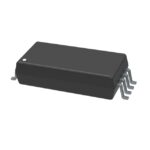 PS8902-Y-V-F3-AX
The activity of extra discounts on wholesale prices is in full swing…
Please fill in your contact information and we will send you the latest wholesale price list.







