 ChipApex | Global Electronic Components Supplier

SEARCH
Search Product
Search Post
— IC芯片 | 连接器 | 传感器 | 被动器件 —
Search productSearch post
— IC芯片 | 连接器 | 传感器 | 被动器件 —
Consult the customer manager about the wholesale price.
consultation hotline:86-132-6715-2157
email:[email protected]
Contact the product manager for consultation. One-stop consultation is available.
Do you want a lower wholesale price? Please send us your inquiry and we will reply immediately.
The PSD311B-90JI is a low-cost field-programmable microcontroller peripheral from the PSD3XX family, manufactured by STMicroelectronics. It integrates up to 256 Kbit of UV EPROM and optional 16 Kbit SRAM into a single chip. The device features two programmable logic arrays (PAD A and PAD B) with up to 18 inputs and 24 outputs, replacing discrete PLDs or decoders. It supports 19 individually configurable I/O pins for port expansion, address latching, and chip select generation. Designed for 5 V operation, it interfaces directly with 8-bit and 16-bit microcontrollers, eliminating external glue logic. Access times are as fast as 70 ns.
Verify component authenticity through authorized distributors or official manufacturer channels. Confirm package type and revision status prior to procurement. Ensure design compatibility with existing microcontroller architectures. Review datasheet specifications for operating conditions and electrical characteristics. Validate ordering suffixes against current product availability lists.
Select this component when interfacing with 8-bit or 16-bit microcontrollers requiring expanded address space and programmable logic. Consider the PSD311 variant for applications needing 256 Kbit EPROM with 16 Kbit SRAM. Evaluate power consumption requirements, noting that standard PSD3XX versions operate at 5 V. Compare against ZPSD variants if lower standby current is critical for battery-powered designs.
The PSD311B-90JI belongs to the broader PSD3XX family of field-programmable microcontroller peripherals. This family includes various configurations differing in memory size, SRAM presence, and voltage ranges. The '311' designation typically indicates 256 Kbit EPROM capacity. The 'B' suffix often denotes specific speed grades or package variations within the series. Understanding the family architecture aids in selecting appropriate software tools like PSDsoft for configuration.
Direct replacements may include other members of the PSD3XX family with similar memory and logic capacities. Verify pinout compatibility and voltage requirements before substitution. Consider ZPSD3XX variants for improved power efficiency if the application demands lower standby currents. Ensure that any substitute supports the required microcontroller bus protocol and timing specifications.
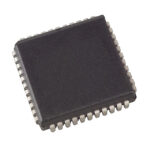 PSD311B-90JI

The activity of extra discounts on wholesale prices is in full swing…
Please fill in your contact information and we will send you the latest wholesale price list.






