 ChipApex | Global Electronic Components Supplier
SEARCH
Search Product
Search Post
— IC芯片 | 连接器 | 传感器 | 被动器件 —
Search productSearch post
— IC芯片 | 连接器 | 传感器 | 被动器件 —
Consult the customer manager about the wholesale price.
consultation hotline:86-132-6715-2157
email:[email protected]
Contact the product manager for consultation. One-stop consultation is available.
Do you want a lower wholesale price? Please send us your inquiry and we will reply immediately.
The PSMUX136 is a high-speed differential 2-to-1 multiplexer/demultiplexer switch manufactured by Diodes Incorporated. It supports signal bandwidths up to 5.5 GHz on the A port and 5.3 GHz on the B port, ensuring excellent signal integrity. The device operates with a supply voltage range of 1.8V to 5.5V and accepts input voltages from 0V to 3.6V. Typical on-resistance is 4.6Ω for the A port and 5.7Ω for the B port, with an on-capacitance of 1.5pF at 240MHz. Propagation delay is typically 0.1ns, and power consumption is low at 35µA typical in normal operation. The component is housed in a compact 10-contact UQFN package measuring 1.5mm x 2.0mm.
Verify the specific ordering suffix when sourcing components. The 'X' suffix indicates tape and reel packaging, while the 'E' suffix denotes lead-free and green compliance. Confirm the pin 1 orientation corresponds to your design requirements, as top-left corner orientation is standard for the ZUA package variant. Ensure compatibility with RoHS directives before finalizing procurement orders.
Select this component for applications requiring differential signal switching with high bandwidth capabilities. Verify that the required input voltage range falls within the 0V to 3.6V specification. Ensure the system supply voltage aligns with the 1.8V to 5.5V operational range. Consider the thermal performance and package size constraints when integrating into dense PCB layouts.
This device belongs to the PSMUX series of high-speed multiplexers from Diodes Incorporated. It is designed for portable electronic devices where space and power efficiency are critical. The UQFN package allows for surface-mount assembly in compact form factors. The product line emphasizes signal integrity and low power consumption for modern mobile computing platforms.
No public substitute part numbers are documented in the official datasheet. Engineers should verify electrical compatibility and pinout alignment if considering alternative manufacturers. Direct replacement requires matching the 10-pin UQFN footprint and differential switching characteristics.
When the EN pin is set to High (1), the chip enters power-down mode with all switches in Hi-Z state. When EN is Low (0), the chip is enabled and operates according to the SEL pin configuration.
The SEL pin selects the active path. A Low signal connects COM to the A Port, while a High signal connects COM to the B Port. This selection only applies when the EN pin is Low.
Yes, the PSMUX136 includes power-off protection to minimize current leakage when the device is powered down or disabled, ensuring minimal impact on the system's power budget.
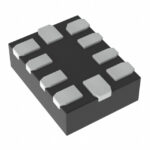 PSMUX136ZUAEX
The activity of extra discounts on wholesale prices is in full swing…
Please fill in your contact information and we will send you the latest wholesale price list.





