 ChipApex | Global Electronic Components Supplier

SEARCH
Search Product
Search Post
Search productSearch post
Consult the customer manager about the wholesale price.
consultation hotline:86-132-6715-2157
email:[email protected]
Contact the product manager for consultation. One-stop consultation is available.
Do you want a lower wholesale price? Please send us your inquiry and we will reply immediately.
PT7C4337ACSE is listed in the Real Time Clock range at ChipApex. The manufacturer field lists Diodes Incorporated. Its product description is IC RTC CLK/CALENDAR I2C 16SOIC. Review the specifications below when checking this part for your BOM.
The PT7C4337ACSE is a Real-Time Clock (RTC) module manufactured by Diodes Incorporated, housed in a 16-pin SOIC package. It features an integrated 32.768 kHz crystal oscillator and communicates via a 2-wire I2C bus interface. The device supports both 12-hour and 24-hour time formats with date tracking including leap year compensation. Operating voltage ranges from 1.2 V to 5.5 V, with full operation supported between 1.8 V and 5.5 V. It includes two programmable alarms, a square wave output, and oscillator failure detection.
Verify component status as the datasheet indicates this part is obsolete. Confirm availability of replacement parts such as RT3A3240N3 or RT3A3241N. Ensure ordering suffixes match required packaging options like tube or tape/reel configurations for production integration.
Select PT7C4337ACSE over PT7C4337A when an integrated crystal is required to simplify PCB layout. Verify that the application voltage falls within the 1.8 V to 5.5 V range for optimal performance. Check if the 16-pin SOIC package fits the design constraints compared to the 8-pin alternatives.
This component belongs to the PT7C4337A family of RTC modules. The 'C' suffix denotes the variant with an integrated crystal oscillator, distinguishing it from the external crystal version. It is designed for applications needing compact solutions without sacrificing timing accuracy.
The datasheet explicitly states the part is obsolete. Recommended replacements are RT3A3240N3 and RT3A3241N. Evaluate these substitutes for pin compatibility and functional equivalence before transitioning production.
The PT7C4337AC includes an integrated 32.768 kHz crystal oscillator, whereas the PT7C4337A requires an external crystal connected to X1 and X2 pins.
When INTCN is set to 1, Alarm 1 triggers INTA and Alarm 2 triggers SQW/INTB. When INTCN is 0, both alarms trigger INTA, and SQW/INTB outputs a square wave.
The maximum SCL clock frequency is 400 kHz, supporting standard I2C high-speed mode operations.
Explore related parts through Clock/Timing, Integrated Circuits (ICs), all product categories, ChipApex homepage.
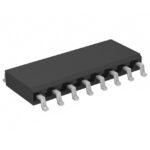 PT7C4337ACSE

The activity of extra discounts on wholesale prices is in full swing…
Please fill in your contact information and we will send you the latest wholesale price list.





