 ChipApex | Global Electronic Components Supplier

SEARCH
Search Product
Search Post
— IC芯片 | 连接器 | 传感器 | 被动器件 —
Search productSearch post
— IC芯片 | 连接器 | 传感器 | 被动器件 —
Consult the customer manager about the wholesale price.
consultation hotline:86-132-6715-2157
email:[email protected]
Contact the product manager for consultation. One-stop consultation is available.
Do you want a lower wholesale price? Please send us your inquiry and we will reply immediately.
PT7C4372ALEX is listed in the Real Time Clock range at ChipApex. The manufacturer field lists Diodes Incorporated. Its product description is IC RTC CLK/CALENDAR I2C 8TSSOP. Review the specifications below when checking this part for your BOM.
The PT7C4372ALEX is an I2C bus interface real-time clock module manufactured by Diodes Incorporated. It provides timekeeping and calendar functions using BCD code for seconds, minutes, hours, day of the week, date, month, and year. The device supports both 12-hour and 24-hour formats with automatic leap year calculation until 2099. It operates with a supply voltage range of 1.8 V to 6 V and a timekeeping voltage range of 1.3 V to 5.5 V. Typical current consumption is 0.4 µA at 3.0 V. The component features high-precision clock adjustment logic and supports I2C high-speed mode up to 400 kHz.
Verify the package type matches the design requirements, as the datasheet indicates availability in 8-pin TSSOP and SOIC configurations. Confirm the specific suffix 'ALEX' corresponds to the intended packaging format such as cut tape or reel from the manufacturer's documentation. Ensure the external crystal frequency (32.768kHz or 32.000kHz) is correctly selected via the Time Trimming register.
Select this component when an I2C-compatible RTC with adjustable clock precision is required. The PT7C4372A/C series supports both 32.768kHz and 32.000kHz external crystals, selectable via the /XSL bit. Designers must account for the open-drain nature of the SDA and interrupt pins, requiring appropriate pull-up resistors on the PCB. Verify that the operating temperature range of -40°C to +85°C meets the application environment.
The PT7C4372ALEX belongs to the PT7C4372A/C family of real-time clocks from Diodes Incorporated. This family is designed for applications requiring accurate timekeeping with minimal power consumption. The 'A' variant typically defaults to 12-hour display mode, while the 'C' variant defaults to 24-hour mode, though both are configurable via the Control Register 2.
Check for pin-to-pin compatible alternatives within the Diodes Incorporated portfolio that match the specific I2C speed and voltage requirements. Verify that any substitute RTC supports the same dual alarm functionality and oscillation stop detection features if these are critical to the system design.
Precision is adjusted using the Time Trimming Register (Address 7). Bits F6-F0 allow correction in steps of ±3.051 ppm for a 32.768kHz crystal or ±3.125 ppm for a 32.000kHz crystal, with a total adjustment range of approximately ±189 ppm.
This function uses a specific bit in the Control Register 2 to detect if the oscillator has stopped. It helps determine if the internal data is valid upon power-on, indicating whether the device was backed up or started from zero voltage.
Yes, a 32-kHz clock output can be enabled via the /INTB pin by setting the corresponding bit in the Control Register 2. Note that the precision of this output cannot be adjusted using the clock trimming function.
Explore related parts through Clock/Timing, Integrated Circuits (ICs), all product categories, ChipApex homepage.
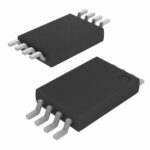 PT7C4372ALEX

The activity of extra discounts on wholesale prices is in full swing…
Please fill in your contact information and we will send you the latest wholesale price list.





