 ChipApex | Global Electronic Components Supplier
SEARCH
Search Product
Search Post
— IC芯片 | 连接器 | 传感器 | 被动器件 —
Search productSearch post
— IC芯片 | 连接器 | 传感器 | 被动器件 —
Consult the customer manager about the wholesale price.
consultation hotline:86-132-6715-2157
email:[email protected]
Contact the product manager for consultation. One-stop consultation is available.
Do you want a lower wholesale price? Please send us your inquiry and we will reply immediately.
The PUMH2-QX is a dual NPN transistor with built-in base resistors, manufactured by Nexperia USA Inc. using TrenchSIP technology. It is housed in an SOT363 (SC-88) surface-mount package. The device features low input current and high current gain, designed for switching applications. Key electrical parameters include a collector-emitter voltage of 50 V, a collector current of 100 mA, and a DC current gain (hFE) ranging from 100 to 200 at a collector current of 2 mA. The base resistors are typically 47 kΩ each. The component operates within a junction temperature range of -55°C to +150°C and is qualified under the AEC-Q101 standard for automotive applications.
Verify the specific ordering code suffix to confirm the exact resistor values and packaging type, as variations exist within the PUMH2 series. Confirm AEC-Q101 compliance requirements if used in automotive designs. Check lead times and availability through authorized Nexperia distributors, as supply levels may fluctuate based on production schedules.
Select the PUMH2-QX when a compact dual NPN solution with integrated biasing is required. Ensure the 50 V collector-emitter voltage rating exceeds the maximum circuit voltage. Verify that the 100 mA collector current capability meets load requirements. Consider the SOT363 package dimensions for PCB layout constraints compared to larger packages like SOT23.
The PUMH2-QX belongs to Nexperia's PUM series of dual transistors with built-in resistors. These components are designed to replace discrete transistor-resistor combinations, reducing component count and assembly time. The QX suffix typically denotes automotive-grade qualification and specific packaging variants within the broader PUM family.
Direct replacements include other PUMH2 variants from Nexperia or equivalent dual NPN resistor-equipped transistors from manufacturers like ON Semiconductor or Diodes Inc., provided pinouts and electrical ratings match. Verify thermal resistance and package compatibility before substitution.
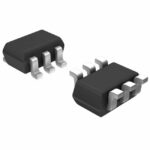 PUMH2-QX
The activity of extra discounts on wholesale prices is in full swing…
Please fill in your contact information and we will send you the latest wholesale price list.




