 ChipApex | Global Electronic Components Supplier
SEARCH
Search Product
Search Post
— IC芯片 | 连接器 | 传感器 | 被动器件 —
Search productSearch post
— IC芯片 | 连接器 | 传感器 | 被动器件 —
Consult the customer manager about the wholesale price.
consultation hotline:86-132-6715-2157
email:[email protected]
Contact the product manager for consultation. One-stop consultation is available.
Do you want a lower wholesale price? Please send us your inquiry and we will reply immediately.
The Nexperia PUMH9-Q is a dual NPN Resistor-Equipped Transistor (RET) housed in a TSSOP6 (SOT363-3) surface-mount package. It integrates two independent NPN transistors with built-in bias resistors, featuring an input resistor R1 of 10 kΩ and a bias ratio R2/R1 of 4.7. The device supports a maximum collector-emitter voltage (VCEO) of 50 V and a continuous output current (IO) of 100 mA per transistor. Total power dissipation is rated at 300 mW for the device and 200 mW per transistor at 25 °C ambient temperature. It includes a transition frequency (fT) of 230 MHz and meets AEC-Q101 automotive qualification standards.
Verify the specific ordering suffix against the manufacturer's current catalog to ensure correct packaging configuration. Confirm that the procurement channel provides valid traceability documentation required for automotive-grade components. Cross-reference the marking code H%9 with manufacturing site codes to validate authenticity. Ensure compliance with RoHS directives as specified in the product data sheet prior to finalizing orders.
Select this component when designing circuits requiring dual NPN switching with integrated base drive resistors. The 10 kΩ input resistance simplifies interface design with standard logic outputs. Verify that the 50 V collector-emitter voltage rating exceeds the maximum operating voltage of the target application. Consider the 300 mW total power dissipation limit when calculating thermal management requirements on the PCB footprint.
The PUMH9-Q belongs to Nexperia's family of resistor-equipped double transistors designed for digital signal processing. It serves as the NPN/NPN variant within the series, complemented by the PNP/PNP PUMB9-Q and NPN/PNP PUMD9-Q. This configuration allows designers to replace multiple discrete components with a single surface-mount device, optimizing assembly efficiency and reducing overall bill of materials complexity.
PUMH9,115
The input bias resistor (R1) is 10 kΩ, and the bias resistor ratio (R2/R1) is 4.7.
Yes, the device is qualified according to the AEC-Q101 standard and is recommended for use in automotive applications.
The total power dissipation (Ptot) for the entire device is 300 mW at an ambient temperature of 25 °C or lower.
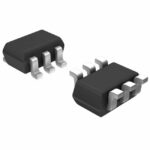 PUMH9-QH
The activity of extra discounts on wholesale prices is in full swing…
Please fill in your contact information and we will send you the latest wholesale price list.




