 ChipApex | Global Electronic Components Supplier
SEARCH
Search Product
Search Post
— IC芯片 | 连接器 | 传感器 | 被动器件 —
Search productSearch post
— IC芯片 | 连接器 | 传感器 | 被动器件 —
Consult the customer manager about the wholesale price.
consultation hotline:86-132-6715-2157
email:[email protected]
Contact the product manager for consultation. One-stop consultation is available.
Do you want a lower wholesale price? Please send us your inquiry and we will reply immediately.
The PZU16DB2,115 is a dual isolated general-purpose Zener diode from the PZUxDB2 series, manufactured by Nexperia. It is housed in a SOT353 (SC-88A) very small Surface-Mounted Device plastic package with five leads. The device features two electrically isolated diodes within a single component, offering a nominal working voltage of 16 V with a tolerance series B2 of approximately ±2%. Key electrical parameters include a total power dissipation of 250 mW and a non-repetitive peak reverse power dissipation of 40 W per diode. The junction temperature range extends from -55 °C to +150 °C, and the device is qualified under the AEC-Q101 standard for automotive applications.
Verify the specific ordering suffix against official Nexperia documentation to confirm packaging details and manufacturing origin. Ensure compatibility with the SOT353 footprint during PCB layout. Confirm that the selected variant meets the required thermal resistance and power dissipation limits for the intended operating environment before finalizing procurement.
Select this component when space-constrained designs require two isolated Zener regulators in a single package. The SOT353 package offers a minimal footprint compared to discrete solutions. Consider the ±2% tolerance series if tight voltage accuracy is critical. Verify that the 250 mW total power dissipation rating aligns with the thermal management capabilities of the target application board.
The PZU16DB2 belongs to the PZUxDB2 series, which provides dual isolated Zener diodes in the SOT353 package. This series covers nominal voltages from 2.7 V to 24 V, allowing designers to choose specific breakdown voltages while maintaining consistent pinout and package dimensions. The 'B2' designation indicates the specific tolerance class for the Zener voltage.
Direct replacements must match the SOT353 package, dual isolated topology, and 16 V nominal voltage. Verify that any substitute component meets or exceeds the 250 mW total power dissipation and AEC-Q101 qualification requirements to ensure functional equivalence in automotive-grade applications.
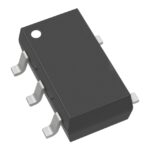 PZU16DB2,115
The activity of extra discounts on wholesale prices is in full swing…
Please fill in your contact information and we will send you the latest wholesale price list.




