 ChipApex | Global Electronic Components Supplier
SEARCH
Search Product
Search Post
— IC芯片 | 连接器 | 传感器 | 被动器件 —
Search productSearch post
— IC芯片 | 连接器 | 传感器 | 被动器件 —
Consult the customer manager about the wholesale price.
consultation hotline:86-132-6715-2157
email:[email protected]
Contact the product manager for consultation. One-stop consultation is available.
Do you want a lower wholesale price? Please send us your inquiry and we will reply immediately.
The QJ6016NH5RP is a 16 Amp Alternistor TRIAC from the QJxx16xHx series, designed for AC power control applications. It features a 600 V repetitive peak off-state voltage (VRRM) and operates in quadrants I, II, and III. The device utilizes a TO-263 (D²-PAK) surface-mount package with an internally isolated mounting tab. Key electrical characteristics include a maximum RMS on-state current of 16 A at a case temperature of 130 °C, a non-repetitive surge peak on-state current of 200 A at 60 Hz, and a gate trigger current (IGT) maximum of 50 mA. The junction-to-case thermal resistance is 0.90 °C/W, supporting operation within a junction temperature range of -40 °C to +150 °C.
Verify the specific package variant during procurement, as the QJxx16xHx series includes both leaded (TO-220L/R) and surface-mount (TO-263/N) options. Confirm that the selected component matches the required voltage rating and gate sensitivity for the target circuit design. Ensure compliance with RoHS directives and UL 1557 recognition if electrical isolation is mandated by the application standards.
Select the QJ6016NH5RP when a surface-mount TRIAC with internal isolation is required for high-temperature AC switching. The 600 V rating suits standard mains voltage applications, while the 50 mA gate sensitivity offers moderate drive requirements. Consider the 0.90 °C/W thermal resistance for heatsinking calculations and ensure the PCB layout accommodates the D²-PAK footprint and isolation creepage distances specified in the datasheet.
The QJ6016NH5RP belongs to the QJxx16xHx series of 16 Amp High Temperature Alternistor Triacs manufactured by Littelfuse (formerly IXYS). This series is engineered to facilitate easier thermal management and provide higher surge handling capabilities compared to standard TRIACs. The 'N' suffix denotes the TO-263 (D²-PAK) surface-mount package, distinguishing it from the TO-220 variants available in the same family.
Direct replacements must match the 16 A current rating, 600 V blocking voltage, and TO-263 package form factor. Verify that alternative components support operation in Quadrants I, II, and III and possess comparable dv/dt ratings for inductive loads. Ensure the substitute part maintains similar thermal resistance and isolation voltage specifications to preserve the original design's safety margins.
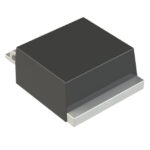 QJ6016NH5RP
The activity of extra discounts on wholesale prices is in full swing…
Please fill in your contact information and we will send you the latest wholesale price list.





