ChipApex | Global Electronic Components Supplier
SEARCH
Search Product
Search Post
— IC芯片 | 连接器 | 传感器 | 被动器件 —
Search productSearch post
— IC芯片 | 连接器 | 传感器 | 被动器件 —
Consult the customer manager about the wholesale price.
consultation hotline:86-132-6715-2157
email:[email protected]
Contact the product manager for consultation. One-stop consultation is available.
Do you want a lower wholesale price? Please send us your inquiry and we will reply immediately.
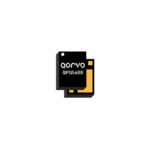
The QPQ5600SR is a signal conditioning component manufactured by Qorvo, specifically designed as a Wi-Fi U-NII 5 band boost filter. It operates within the 6 GHz frequency range with a bandwidth of 320 MHz. The device features an insertion loss of 2.5 dB and utilizes SMD/SMT termination for board mounting. Its physical dimensions are 1.7 mm x 1.3 mm. The operational temperature range spans from -20°C to +95°C. This component belongs to the QPQ5600 series and is categorized under filters.
Verify the specific ordering suffix against official Qorvo documentation to confirm package type and reel specifications. Ensure compatibility with surface mount assembly processes given the small form factor. Confirm that the operating temperature range meets the environmental requirements of the final application. Cross-reference the datasheet revision date to ensure all electrical parameters are current before integration into design files.
Select this component when designing systems requiring dedicated filtering for the 6 GHz Wi-Fi band. Consider the 1.7 mm x 1.3 mm footprint for space-constrained layouts. Evaluate the 2.5 dB insertion loss against system link budget requirements. Compare performance metrics with other members of the QPQ5600 series if broader frequency coverage or different packaging options are needed for the specific product line.
This part is part of Qorvo's portfolio of passive RF components aimed at improving wireless performance. It complements other filters in the QPQ series, such as the QPQ5604SR which covers extended U-NII bands. These components support the evolution of Wi-Fi standards into higher frequency spectrums, enabling faster data rates and reduced interference in dense wireless environments.
Publicly confirmed substitute part numbers are not available in the provided source material. Consult Qorvo engineering for potential alternatives within the QPQ5600 series or newer generations. Verify pinout and electrical parameter equivalence before considering any cross-references.
 QPQ5600SR
The activity of extra discounts on wholesale prices is in full swing…
Please fill in your contact information and we will send you the latest wholesale price list.