 ChipApex | Global Electronic Components Supplier
SEARCH
Search Product
Search Post
— IC芯片 | 连接器 | 传感器 | 被动器件 —
Search productSearch post
— IC芯片 | 连接器 | 传感器 | 被动器件 —
Consult the customer manager about the wholesale price.
consultation hotline:86-132-6715-2157
email:[email protected]
Contact the product manager for consultation. One-stop consultation is available.
Do you want a lower wholesale price? Please send us your inquiry and we will reply immediately.
The QT102-ISG is a single-key capacitive touch controller utilizing QTouch™ spread-spectrum charge-transfer technology. It operates within a voltage range of 2V to 5.5V, consuming 23µA at 2V. The device features a toggle output mode with programmable auto-off delays and external sustain/cancel functions. It includes self-calibration, drift compensation, and noise filtering for reliable sensing through panels up to 50mm thick. The component is housed in a compact SOT-23-6 package (3x3mm) and supports active high or low hardware-configurable outputs.
Verify the specific suffix ISG confirms the industrial temperature range of -40°C to +85°C and the SOT-23-6 package type. Confirm RoHS compliance status matches current manufacturing standards. Ensure the datasheet revision corresponds to version 2.3 or later for accurate timing specifications. Cross-reference pinout diagrams with PCB layout requirements before finalizing procurement orders.
Select this component for applications requiring a single toggle input with automatic shutdown features. Evaluate panel thickness and material dielectric constants to determine appropriate sample capacitor values. Consider the required response time versus power consumption trade-offs when sizing the Cs component. Verify that the load capacitance remains within limits to prevent gain degradation.
The QT102 belongs to the QTouch™ family of capacitive touch controllers designed for simple interface solutions. It complements more complex multi-key sensors by offering a low-cost, minimal-component solution for basic on/off control. The device integrates signal processing directly, reducing the need for external microcontrollers in simple power control tasks.
Publicly confirmed substitute part numbers are not available in the provided documentation. Designers should evaluate other single-channel QTouch devices if pin compatibility or feature sets differ significantly.
The delay can be set using predefined hardwired connections to Vss, Vdd, or OUT, or programmed via an external RC network connected to the TIME and SNS pins.
The series resistor Rs, typically 4.7kΩ to 33kΩ, suppresses electrostatic discharge (ESD) and electromagnetic interference (EMI) effects on the sense line.
The QT102 uses asymmetric drift compensation where the reference level tracks the raw signal slowly when no detection occurs, adjusting faster for decreasing signals than increasing ones.
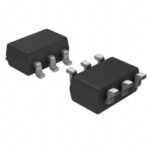 QT102-ISG
The activity of extra discounts on wholesale prices is in full swing…
Please fill in your contact information and we will send you the latest wholesale price list.







