 ChipApex | Global Electronic Components Supplier
SEARCH
Search Product
Search Post
— IC芯片 | 连接器 | 传感器 | 被动器件 —
Search productSearch post
— IC芯片 | 连接器 | 传感器 | 被动器件 —
Consult the customer manager about the wholesale price.
consultation hotline:86-132-6715-2157
email:[email protected]
Contact the product manager for consultation. One-stop consultation is available.
Do you want a lower wholesale price? Please send us your inquiry and we will reply immediately.
The QT113-D is a development board designed for evaluating Microchip Technology's QT113 capacitive touch sensor integrated circuits. This evaluation platform supports the QT113 and QT113X variants, enabling engineers to experiment with touch sensing applications using minimal external components. The board typically operates with alkaline batteries and includes provisions for adding a piezoelectric audio transducer for acoustic feedback. It facilitates rapid prototyping by allowing users to calibrate sensitivity and test touch pad responsiveness without complex circuit design.
Verify current availability and lead times directly with authorized distributors or Microchip Technology, as development boards may have limited production runs. Confirm that the specific revision matches your target IC variant (QT113 or QT113X). Check for any required accessories such as batteries or jumpers not included in the base package. Ensure compliance with regional regulatory standards if deploying in final products.
Select the QT113-D when evaluating the QT113 family of capacitive touch sensors. This board is suitable for initial hardware validation and software configuration testing. Consider the QT113X variant if additional features or pin configurations are required. Ensure compatibility with your target microcontroller interface if integrating into a larger system. Review the datasheet for specific component values and jumper settings.
The QT113-D belongs to Microchip's QTouch development tool lineup, specifically targeting the QT113 series of charge-transfer touch sensors. These tools are intended for engineers developing touch-sensitive user interfaces. The board simplifies the learning curve for QTouch technology by providing a pre-configured hardware platform. It complements the broader ecosystem of Microchip's embedded control and touch sensing solutions.
No direct replacement part numbers are publicly documented for this specific evaluation board. Alternative evaluation platforms from other vendors may offer similar functionality but will require different configuration and software support. Verify compatibility with existing design workflows before considering substitutes.
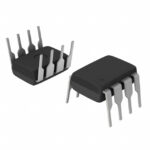 QT113-D
The activity of extra discounts on wholesale prices is in full swing…
Please fill in your contact information and we will send you the latest wholesale price list.





