ChipApex | Global Electronic Components Supplier
SEARCH
Search Product
Search Post
— IC芯片 | 连接器 | 传感器 | 被动器件 —
Search productSearch post
— IC芯片 | 连接器 | 传感器 | 被动器件 —
Consult the customer manager about the wholesale price.
consultation hotline:86-132-6715-2157
email:[email protected]
Contact the product manager for consultation. One-stop consultation is available.
Do you want a lower wholesale price? Please send us your inquiry and we will reply immediately.
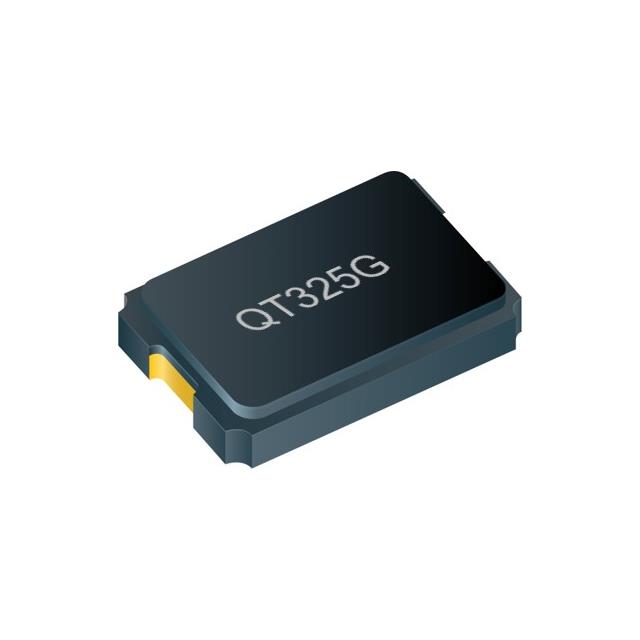
The QST QT325G-48.000MAAV-T is a quartz crystal resonator designed for general-purpose clocking applications. It operates at a fundamental frequency of 48.000 MHz with a load capacitance of 18 pF. The device features a surface-mount package, specifically the 3225 metric size (3.2mm x 2.5mm), ensuring compatibility with automated assembly processes. Key electrical parameters include a series resonance frequency tolerance and stability specifications defined by the manufacturer's standard quality grades. The component utilizes silver electrode construction and is housed in a ceramic or metal can package variant depending on specific sub-model configurations, providing reliable oscillation stability for digital circuits requiring precise timing references.
Verify the exact load capacitance and equivalent series resistance requirements against the target oscillator circuit design before procurement. Confirm that the specified package dimensions match the board layout constraints. Ensure that the operating temperature range aligns with the environmental conditions of the final application to guarantee long-term frequency stability and reliability.
Select this component when a 48 MHz fundamental frequency is required for standard digital logic interfaces. Consider the package size constraints and the need for surface-mount technology compatibility. Evaluate the load capacitance requirements of the host oscillator circuit to ensure proper frequency matching and startup conditions are met within the system design parameters.
This part belongs to the QT325G series of quartz crystal resonators from QST. The series typically offers various frequency options and package sizes to support diverse electronic design needs. The 48 MHz variant is commonly used in applications requiring standard baud rates or clock divisions compatible with common microprocessor architectures and communication protocols.
Direct substitutes may include other manufacturers' 3225 package 48 MHz crystals with identical load capacitance and frequency tolerance. Verify pinout compatibility and mechanical dimensions before substitution. Cross-reference electrical parameters such as ESR and shunt capacitance to ensure circuit performance remains unchanged.
 QT325G-48.000MAAV-T
The activity of extra discounts on wholesale prices is in full swing…
Please fill in your contact information and we will send you the latest wholesale price list.