ChipApex | Global Electronic Components Supplier
SEARCH
Search Product
Search Post
— IC芯片 | 连接器 | 传感器 | 被动器件 —
Search productSearch post
— IC芯片 | 连接器 | 传感器 | 被动器件 —
Consult the customer manager about the wholesale price.
consultation hotline:86-132-6715-2157
email:[email protected]
Contact the product manager for consultation. One-stop consultation is available.
Do you want a lower wholesale price? Please send us your inquiry and we will reply immediately.
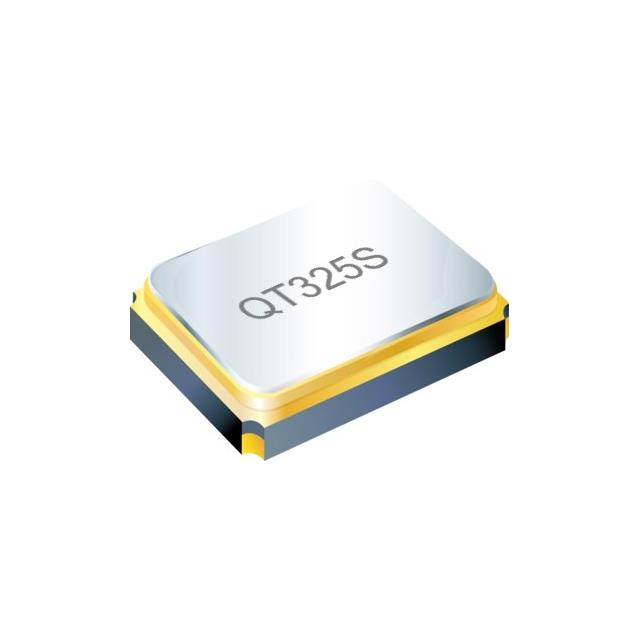
The QT325S-12.000MAHE-T is a surface-mount quartz crystal oscillator manufactured by QST, part of the QT325S series. It features a 3.2mm x 2.5mm SMD package with four pads and no lead construction. The device operates at a nominal frequency of 12 MHz with a load capacitance of 12 pF. Frequency stability is specified at ±30 ppm at 25°C and ±30 ppm over the temperature range of -40°C to +85°C. The unit utilizes a glass seal technology for environmental protection and includes an equivalent series resistance (ESR) of 150 Ohms.
Verify component authenticity through authorized distributors or direct manufacturer channels. Confirm that the received part matches the specific suffix 'HE' which denotes the required ±30 ppm stability across the extended industrial temperature range of -40°C to +85°C. Ensure storage conditions comply with moisture sensitivity levels prior to reflow soldering to maintain performance integrity.
Select this component when a 12 MHz reference is required in space-constrained designs utilizing the standard 3.2x2.5 mm footprint. The ±30 ppm stability specification suits general-purpose digital logic and communication interfaces where moderate precision is sufficient. Consider alternative suffixes if stricter frequency tolerance or different operating temperature ranges are mandated by the system design requirements.
This model belongs to the QT325S family of quartz crystals, characterized by their small form factor and reliability. Variants within this series differ primarily in frequency, load capacitance, and stability codes. The 'HE' suffix specifically identifies the electrical characteristics regarding temperature drift and initial accuracy, distinguishing it from other commercial or automotive grade options in the same physical package.
Compatible substitutes include the QT325S-12.000MAHJ-T and QT325S-12.000MAHK-T, provided the application can accommodate differences in load capacitance or stability specifications. Verify pin compatibility and mounting dimensions before substitution to ensure mechanical fit within the existing PCB layout.
 QT325S-12.000MAHE-T
The activity of extra discounts on wholesale prices is in full swing…
Please fill in your contact information and we will send you the latest wholesale price list.