ChipApex | Global Electronic Components Supplier
SEARCH
Search Product
Search Post
— IC芯片 | 连接器 | 传感器 | 被动器件 —
Search productSearch post
— IC芯片 | 连接器 | 传感器 | 被动器件 —
Consult the customer manager about the wholesale price.
consultation hotline:86-132-6715-2157
email:[email protected]
Contact the product manager for consultation. One-stop consultation is available.
Do you want a lower wholesale price? Please send us your inquiry and we will reply immediately.
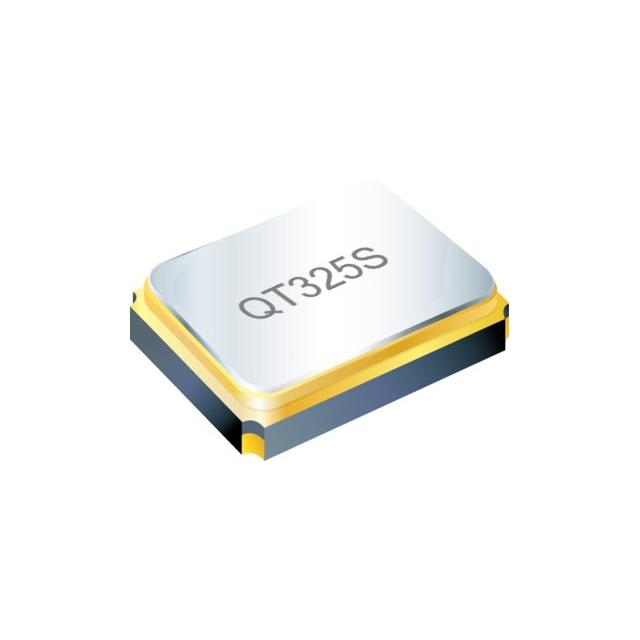
The QT325S-25.000MAHK-T is a quartz crystal resonator manufactured by QST, operating at a fundamental frequency of 25 MHz. It utilizes a glass-sealed surface-mount package with dimensions of 3.2 x 2.5 mm and a height of approximately 0.7 mm. The component features a load capacitance of 18 pF and a series resistance of 50 Ohms. Frequency tolerance and stability are specified at ±30 ppm across the operating temperature range of -40°C to +85°C. The device is designed for high-frequency applications requiring precise timing signals in compact electronic systems.
Verify the specific suffix designation against official manufacturer documentation to ensure correct frequency tolerance and packaging specifications. Confirm RoHS compliance status and lead-free requirements prior to integration. Cross-reference part numbers carefully as similar designations may indicate different electrical characteristics or manufacturing batches. Ensure compatibility with existing PCB footprints and reflow soldering profiles defined in the datasheet.
Select this component when a 25 MHz reference signal is required in a minimal footprint. Consider the 18 pF load capacitance requirement for oscillator circuit design. Evaluate the ±30 ppm stability against system timing accuracy needs. Compare thermal performance specifications if operation exceeds standard commercial temperature limits. Verify package dimensions against mechanical constraints in the final enclosure design.
This part belongs to the QT325S series of surface-mount quartz crystals. The series offers various frequency options within a standardized 3.2x2.5 mm package format. Components in this family share common mounting characteristics while differing in frequency and tolerance specifications. The glass-seal technology distinguishes these parts from ceramic-packaged alternatives in terms of long-term stability.
Cross-reference tools suggest parametrically similar parts from other manufacturers. Verify equivalent frequency, load capacitance, and stability ratings before substitution. Check package dimension tolerances to ensure mechanical fit. Confirm that alternative components meet the same environmental and reliability standards.
 QT325S-25.000MAHK-T
The activity of extra discounts on wholesale prices is in full swing…
Please fill in your contact information and we will send you the latest wholesale price list.