ChipApex | Global Electronic Components Supplier
SEARCH
Search Product
Search Post
— IC芯片 | 连接器 | 传感器 | 被动器件 —
Search productSearch post
— IC芯片 | 连接器 | 传感器 | 被动器件 —
Consult the customer manager about the wholesale price.
consultation hotline:86-132-6715-2157
email:[email protected]
Contact the product manager for consultation. One-stop consultation is available.
Do you want a lower wholesale price? Please send us your inquiry and we will reply immediately.
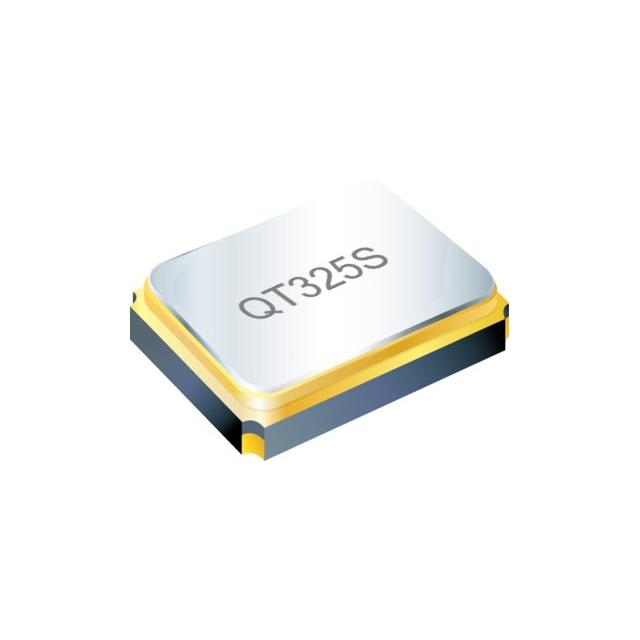
The QST QT325S-26.000MDII-T is a 26.000 MHz crystal oscillator from the QT325S series, designed for high-frequency timing applications. It operates within a supply voltage range of 1.8V to 3.6V and supports multiple output logic standards including LVCMOS, LVDS, HCSL, and CML. The device features a frequency stability of ±50 ppm over the industrial temperature range of -40°C to +85°C. It utilizes a surface-mount package with dimensions of 3.2mm x 2.5mm, offering low phase noise and high reliability for demanding electronic systems requiring precise clock signals.
Verify the specific output logic level (LVCMOS, LVDS, etc.) required for your design, as this variant may have different suffixes for different outputs. Confirm the load capacitance requirements match your circuit design to ensure accurate frequency operation. Check the latest datasheet for pinout compatibility and recommended soldering profiles to prevent thermal damage during assembly. Ensure the supply voltage range aligns with your system's power rails before ordering.
Choose this component when a small form factor is critical alongside high-frequency stability. Compare phase noise specifications against other oscillators if signal integrity is paramount for your application. Consider the available output drive strength and logic family compatibility with your downstream components. Evaluate the temperature range requirements to ensure the industrial grade meets your environmental conditions.
This oscillator belongs to the QT325S series, which offers various frequencies and output options in a compact 3225 package. It is part of a broader lineup of MEMS-based timing solutions designed to replace traditional quartz crystals in space-constrained designs. The series provides alternatives to discrete crystal circuits by integrating the resonator and oscillator circuit into a single surface-mount device.
Direct replacements should be sought from the same manufacturer's QT325S series with matching frequency and package size. Verify that alternative parts support the same output logic levels and voltage ranges. Cross-reference phase noise and jitter specifications to ensure equivalent performance in high-speed applications. Consult official substitution guides for any changes in pin configuration or mounting requirements.
 QT325S-26.000MDII-T
The activity of extra discounts on wholesale prices is in full swing…
Please fill in your contact information and we will send you the latest wholesale price list.