 ChipApex | Global Electronic Components Supplier
SEARCH
Search Product
Search Post
— IC芯片 | 连接器 | 传感器 | 被动器件 —
Search productSearch post
— IC芯片 | 连接器 | 传感器 | 被动器件 —
Consult the customer manager about the wholesale price.
consultation hotline:86-132-6715-2157
email:[email protected]
Contact the product manager for consultation. One-stop consultation is available.
Do you want a lower wholesale price? Please send us your inquiry and we will reply immediately.
The QT411-ISSG is a linear capacitive touch slider sensor IC from Microchip Technology's QSlide™ series, housed in a 14-pin TSSOP package. It operates on a single supply voltage ranging from 2.5V to 5.5V with a typical supply current of 750µA. The device features a 7-bit resolution output (0-127) representing angular position across three sensing channels. It utilizes an SPI slave interface for communication and supports both synchronized and free-run acquisition modes. The operating temperature range spans from -40°C to +85°C.
Verify component authenticity through authorized distributors or direct manufacturer channels. Confirm the specific ordering suffix matches the required package variant. Check for Product Change Notifications regarding manufacturing updates. Ensure compliance with RoHS3 specifications as indicated in official documentation. Validate that the part status aligns with current availability constraints.
Select this component for applications requiring linear position sensing via a resistive element. Ensure the host controller supports SPI slave mode communication. Verify that the panel thickness and dielectric constant allow for adequate capacitive coupling. Consider the power supply stability requirements to prevent acquisition errors during sleep mode transitions. Evaluate the need for spread-spectrum modulation to mitigate environmental noise interference.
The QT411-ISSG belongs to the QSlide™ family of touch sensor ICs designed by Quantum Research Group and distributed by Microchip Technology. It serves as an enhanced replacement for the QT401, offering improved stability against temperature variations and environmental influences. The device eliminates the need for special endpoint calibration while maintaining high positional accuracy through mathematical analysis of synchronous sensing channels.
The QT411 is explicitly designed to replace the QT401. Note that the QT411 lacks the proximity detection function present in the QT401. Designers must adjust firmware to accommodate the absence of proximity sensing and ensure compatibility with the new calibration and drift compensation behaviors.
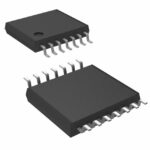 QT411-ISSG
The activity of extra discounts on wholesale prices is in full swing…
Please fill in your contact information and we will send you the latest wholesale price list.







