ChipApex | Global Electronic Components Supplier
SEARCH
Search Product
Search Post
— IC芯片 | 连接器 | 传感器 | 被动器件 —
Search productSearch post
— IC芯片 | 连接器 | 传感器 | 被动器件 —
Consult the customer manager about the wholesale price.
consultation hotline:86-132-6715-2157
email:[email protected]
Contact the product manager for consultation. One-stop consultation is available.
Do you want a lower wholesale price? Please send us your inquiry and we will reply immediately.
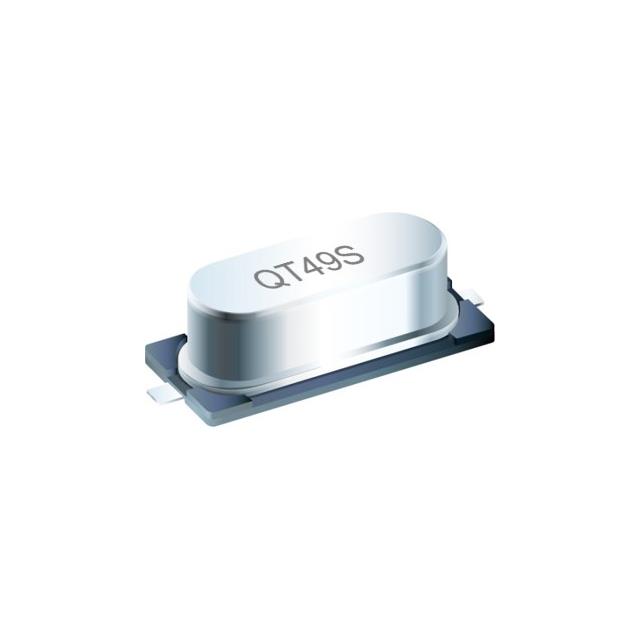
The QT49S-30.000MBBK-T is a surface-mount quartz crystal oscillator manufactured by QST Corporation, operating at a fundamental frequency of 30 MHz. It utilizes an HC49-SMD package with dimensions of 12.7 x 4.8 x 3.8 mm. The component features a load capacitance of 20 pF and an equivalent series resistance (ESR) of 30 Ohms. Frequency tolerance is specified at ±50 ppm at 25°C, with stability maintained within ±50 ppm over the operating temperature range of -20°C to 70°C. This device is designed for applications requiring reliable clock signals in compact electronic systems.
Verify that the specific suffix B indicates ±50 ppm tolerance when sourcing replacements. Confirm the HC49-SMD footprint matches the PCB design requirements. Ensure the operating temperature range of -20°C to 70°C aligns with the environmental conditions of the target application. Cross-reference datasheets from authorized distributors to confirm RoHS compliance status and package dimensions prior to final procurement decisions.
Select this component when a 30 MHz surface-mount crystal with moderate frequency stability is required. The HC49-SMD form factor allows for automated assembly processes. Consider the 30 Ohm ESR value for oscillator circuit compatibility. The ±50 ppm tolerance is suitable for non-critical timing applications where higher precision is not mandated. Evaluate thermal performance against the specified -20°C to 70°C range.
This part belongs to the QT49S series of quartz crystals from QST Corporation. The series offers various frequency options and tolerance levels, identified by alphanumeric suffixes. The QT49S designation specifically denotes the HC49-SMD package style. Other variants in the series may feature different frequencies, load capacitances, or tighter tolerance specifications depending on the ordering code.
Direct substitutes include other 30 MHz HC49-SMD crystals with matching 20 pF load capacitance and similar ESR values. Verify that alternative parts support third overtone operation if used in overtone circuits. Check that replacement components meet the same -20°C to 70°C operating temperature range and ±50 ppm stability requirements.
 QT49S-30.000MBBK-T
The activity of extra discounts on wholesale prices is in full swing…
Please fill in your contact information and we will send you the latest wholesale price list.