 ChipApex | Global Electronic Components Supplier
SEARCH
Search Product
Search Post
— IC芯片 | 连接器 | 传感器 | 被动器件 —
Search productSearch post
— IC芯片 | 连接器 | 传感器 | 被动器件 —
Consult the customer manager about the wholesale price.
consultation hotline:86-132-6715-2157
email:[email protected]
Contact the product manager for consultation. One-stop consultation is available.
Do you want a lower wholesale price? Please send us your inquiry and we will reply immediately.
The QT60248-ASG is a 24-key QMatrix touch controller utilizing transverse charge-transfer sensing. It operates on a single +3V to +5V supply within an industrial temperature range of -40°C to +105°C. The device features a 32-pin lead-free TQFP package and communicates via an SPI slave interface. Key parameters include internal oscillator operation, detection integrators for noise immunity, and onboard EEPROM for setup storage.
Verify the specific ordering suffix ASG confirms the industrial temperature grade (-40°C to +105°C) and lead-free TQFP-32 packaging. Ensure the component matches the 24-key variant specifications rather than the 16-key alternative. Confirm that the datasheet revision aligns with current manufacturing standards before finalizing procurement orders.
Select this model when a 24-key matrix configuration is required for harsh environments. It is suitable for applications needing sealed, watertight control panels immune to humidity or vandalism. Consider the QT60168 if only 16 keys are needed. Ensure the host system supports SPI communication and can handle the required calibration timing constraints.
This component belongs to the QProx QT60168/QT60248 family of digital charge-transfer sensors. These ICs are designed specifically for scanned passive X-Y matrices. They allow arbitrary key shapes and sizes, supporting mixed layouts within a single panel while maintaining robust performance under varying environmental conditions.
The QT60168-ASG serves as a functional substitute for designs requiring only 16 keys. Both devices share identical electrical characteristics and pinouts, differing solely in maximum supported key count. Verify that unused Y-lines are properly handled if substituting between these variants.
Key sensitivity is set individually via simple functions over the serial port by a host microcontroller. Setup configurations are stored in onboard EEPROM and persist across power cycles.
FMEA tests provide continuous self-test and reporting diagnostics to ensure safe operation in critical applications. Tests run during dummy timeslots after enabled keys and report status via the serial interface.
Yes, key sizes and shapes can be mixed arbitrarily within a single panel. Surface areas can vary by a factor of 20:1 without affecting overall functionality.
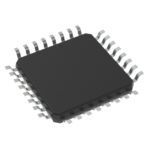 QT60248-ASG
The activity of extra discounts on wholesale prices is in full swing…
Please fill in your contact information and we will send you the latest wholesale price list.





