 ChipApex | Global Electronic Components Supplier
SEARCH
Search Product
Search Post
— IC芯片 | 连接器 | 传感器 | 被动器件 —
Search productSearch post
— IC芯片 | 连接器 | 传感器 | 被动器件 —
Consult the customer manager about the wholesale price.
consultation hotline:86-132-6715-2157
email:[email protected]
Contact the product manager for consultation. One-stop consultation is available.
Do you want a lower wholesale price? Please send us your inquiry and we will reply immediately.
The QTK252-32.768KBE-T is a standard clock oscillator manufactured by QST Products, LLC. It operates at a nominal frequency of 32.768 kHz with a CMOS output type. The device supports a supply voltage of 3.3V and features an enable/disable control function. Frequency stability is rated at ±50 ppm. The component utilizes a 4-pin CSMD package with dimensions of 2.5mm x 2.0mm. It is designed for operation within a temperature range of -40°C to +85°C.
Verify the manufacturer designation carefully, as the model number prefix may appear associated with TXC Corporation in some distributor listings while the official datasheet identifies QST Products, LLC as the producer. Confirm the specific package outline and pin configuration against the official QST documentation to ensure compatibility with the target PCB footprint. Ensure the required operating temperature range aligns with the specified -40°C to +85°C rating for the intended environment.
Select this component when a low-frequency, high-stability timing source is required for real-time clock or general system synchronization tasks. The CMOS output level simplifies integration into microcontroller-based designs without additional buffering. Consider the 3.3V supply requirement and the enable/disable feature for power management strategies. The small 2.5x2.0mm package is advantageous for dense board layouts where space is limited compared to larger through-hole alternatives.
This oscillator belongs to the QTK series of surface-mount crystal oscillators from QST Products. These components are engineered to provide precise timing signals for portable electronics and industrial equipment. The 32.768 kHz frequency is a standard choice for dividing down to one-second intervals in timekeeping applications. The series offers various frequency options and package sizes to accommodate different design constraints.
Direct substitutes include other 32.768 kHz CMOS oscillators in similar SMD packages with matching voltage and stability specifications. Verify that any replacement part maintains the same enable/disable pinout and electrical characteristics to ensure seamless integration without circuit modification.
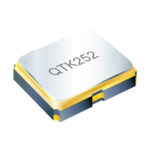 QTK252-32.768KBE-T
The activity of extra discounts on wholesale prices is in full swing…
Please fill in your contact information and we will send you the latest wholesale price list.





