ChipApex | Global Electronic Components Supplier
SEARCH
Search Product
Search Post
— IC芯片 | 连接器 | 传感器 | 被动器件 —
Search productSearch post
— IC芯片 | 连接器 | 传感器 | 被动器件 —
Consult the customer manager about the wholesale price.
consultation hotline:86-132-6715-2157
email:[email protected]
Contact the product manager for consultation. One-stop consultation is available.
Do you want a lower wholesale price? Please send us your inquiry and we will reply immediately.
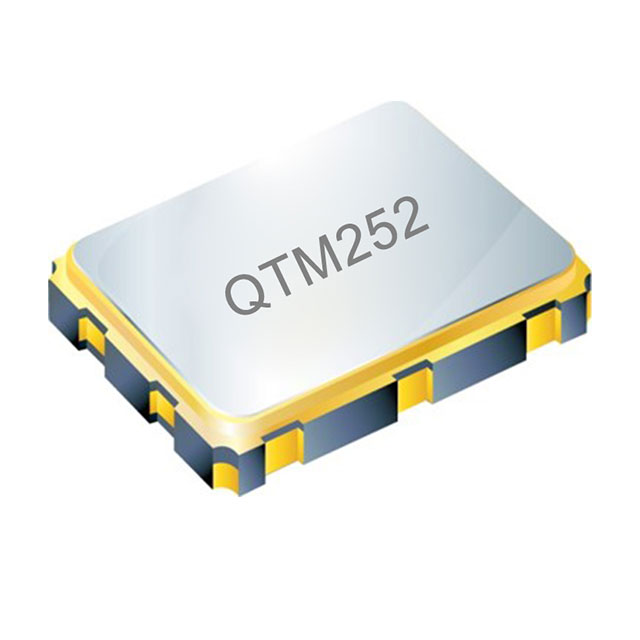
The QTM252-24.000MDE-T is a standard CMOS quartz oscillator manufactured by TXC Corporation under the QTM252 series. It operates at a nominal frequency of 24 MHz with a frequency stability of ±50 ppm across an operating temperature range of -40°C to +85°C. The device utilizes a 2.5 mm x 2.0 mm surface-mount package and supports a supply voltage of 1.8 V. It features a three-state enable function controlled via Pin 1, allowing for output disable when the pin is pulled low. The oscillator is designed for applications requiring compact form factors and reliable clock signals in industrial and consumer electronics.
Verify the manufacturer designation carefully, as the model number appears in catalogs associated with both TXC Corporation and QST. Confirm the specific suffix 'MDE' corresponds to the required voltage and tolerance specifications. Check regional availability restrictions, as some distributors indicate limited sales in certain areas. Ensure the reel packaging quantity aligns with production requirements.
Select this component for designs requiring a small footprint with robust industrial temperature performance. The ±50 ppm stability is suitable for general-purpose digital circuits. Consider the three-state feature for power management strategies. Verify that the 1.8V supply voltage matches the target system's logic levels. Evaluate the 1ps RMS phase jitter specification against high-speed interface requirements.
This part belongs to the QTM252 series of surface-mount quartz oscillators. The series offers various frequencies and voltage options within the 2520 package. It is positioned as a solution for space-constrained applications needing stable clock sources. The product line supports both consumer and industrial grade specifications.
Direct substitutes include other parts from the QTM252 family with matching frequency and voltage, such as QTM252-24.000MBE-T or QTM252-24.000MCE-T, provided the package and electrical parameters are identical. Cross-reference datasheets to ensure equivalent jitter and enable pin configurations.
 QTM252-24.000MDE-T
The activity of extra discounts on wholesale prices is in full swing…
Please fill in your contact information and we will send you the latest wholesale price list.