ChipApex | Global Electronic Components Supplier
SEARCH
Search Product
Search Post
— IC芯片 | 连接器 | 传感器 | 被动器件 —
Search productSearch post
— IC芯片 | 连接器 | 传感器 | 被动器件 —
Consult the customer manager about the wholesale price.
consultation hotline:86-132-6715-2157
email:[email protected]
Contact the product manager for consultation. One-stop consultation is available.
Do you want a lower wholesale price? Please send us your inquiry and we will reply immediately.
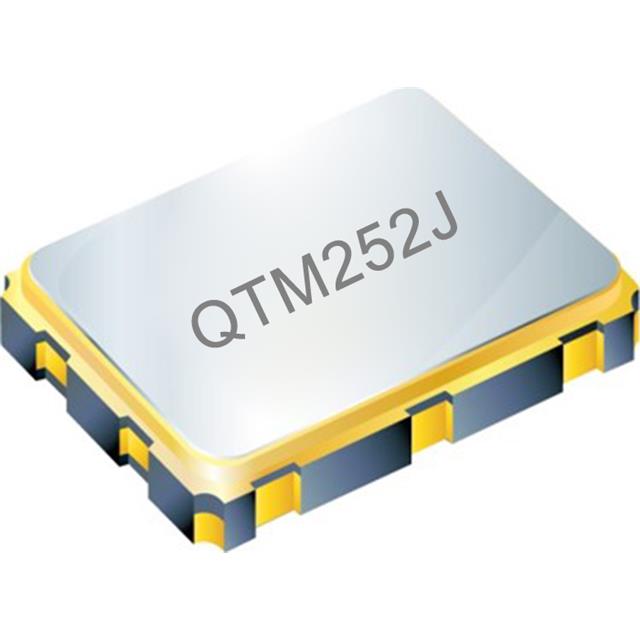
The QTM252J-16.000MDJ-T is a standard CMOS quartz oscillator manufactured by TXC Corporation under the QST brand. It operates at a frequency of 16 MHz with a supply voltage of 1.8V. The device features a 4-SMD, No Lead package measuring 2.5mm x 2.0mm. Frequency stability is rated at ±50ppm across an operating temperature range of -40°C to +105°C. Key electrical parameters include a maximum current consumption of 22 mA and a typical standby current of 400 µA in power-down mode.
Verify the manufacturer designation carefully, as this component is produced by TXC Corporation but marketed under the QST brand name. Confirm the specific suffix MDJ-T matches the required 1.8V supply and ±50ppm stability specifications. Ensure the order quantity aligns with the standard factory packaging requirements of 3000 units per reel to avoid handling discrepancies.
Select this oscillator when a compact 2520 footprint is required alongside strict low-voltage operation at 1.8V. The ±50ppm stability suits general-purpose timing applications rather than high-precision metrology. Consider the wide industrial temperature range (-40°C to +105°C) if the environment exceeds standard commercial limits. Verify that the CMOS output level matches the input requirements of the target microcontroller or FPGA.
This component belongs to the QTM252J series of surface-mount quartz oscillators. The series offers various frequencies and voltage options within the same 2.5mm x 2.0mm package. It serves as a direct replacement for legacy through-hole crystals where space constraints and automated assembly are priorities. The QST branding indicates distribution through specific authorized channels.
Compatible substitutes include other 16MHz 1.8V 2520 CMOS oscillators from manufacturers such as Epson, NDK, or SiTime, provided they match the pinout and stability requirements. Direct cross-reference models like the QTM252J-16.000MBJ-T differ only in supply voltage (3.3V vs 1.8V) and must be verified against circuit design constraints.
 QTM252J-16.000MDJ-T
The activity of extra discounts on wholesale prices is in full swing…
Please fill in your contact information and we will send you the latest wholesale price list.