ChipApex | Global Electronic Components Supplier
SEARCH
Search Product
Search Post
— IC芯片 | 连接器 | 传感器 | 被动器件 —
Search productSearch post
— IC芯片 | 连接器 | 传感器 | 被动器件 —
Consult the customer manager about the wholesale price.
consultation hotline:86-132-6715-2157
email:[email protected]
Contact the product manager for consultation. One-stop consultation is available.
Do you want a lower wholesale price? Please send us your inquiry and we will reply immediately.
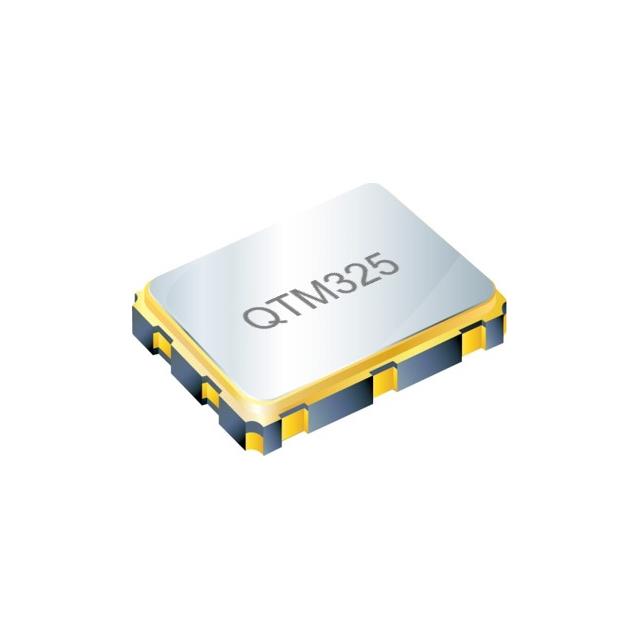
The QTM325-26.000MBB-T is a surface-mount CMOS oscillator manufactured by QST, operating at a nominal frequency of 26MHz. It utilizes a 3.3V supply voltage and features a standard CMOS output signal. The component is housed in a compact 4-SMD, no-lead package with dimensions of 3.2mm x 2.5mm and a maximum seated height of 1.10mm. It offers a frequency stability of ±50ppm over the operating temperature range of -40°C to +85°C. The device is RoHS3 compliant and REACH compliant, designed for reliable integration into space-constrained electronic circuits requiring precise timing signals.
Verify the specific suffix 'BB' corresponds to the required ±50ppm stability and 3.3V operation when sourcing. Confirm that the 4-SMD no-lead package matches the target PCB land pattern. Ensure the selected distributor provides documentation confirming RoHS3 and REACH compliance status for the specific batch. Cross-reference the manufacturer part number to avoid confusion with similar frequencies or voltage variants within the QTM325 series.
Select this component when a 26MHz CMOS clock source is required in a minimal footprint. The 3.3V supply requirement must align with the system power architecture. Consider the ±50ppm stability specification against the timing tolerance requirements of the connected digital logic. The operating temperature range of -40°C to +85°C supports general industrial and commercial applications without needing extended grade variants.
This oscillator belongs to the QTM325 series from QST, which provides various frequency and stability options in a standardized SMD package. The series is designed to replace discrete crystal oscillator solutions with integrated alternatives. Similar parts in the series include different frequency codes such as 25.000 or 50.000, and varying stability suffixes like D or E, all sharing the same physical dimensions and interface characteristics.
Direct substitutes may include other 26MHz 3.3V CMOS oscillators in 3.2x2.5mm packages from manufacturers such as TXC or Epson. Verify electrical parameters including supply voltage, output swing, and load capacitance before substitution. Physical pinout compatibility must be confirmed, as some competitors may use different pin assignments for power and ground.
 QTM325-26.000MBB-T
The activity of extra discounts on wholesale prices is in full swing…
Please fill in your contact information and we will send you the latest wholesale price list.