ChipApex | Global Electronic Components Supplier
SEARCH
Search Product
Search Post
— IC芯片 | 连接器 | 传感器 | 被动器件 —
Search productSearch post
— IC芯片 | 连接器 | 传感器 | 被动器件 —
Consult the customer manager about the wholesale price.
consultation hotline:86-132-6715-2157
email:[email protected]
Contact the product manager for consultation. One-stop consultation is available.
Do you want a lower wholesale price? Please send us your inquiry and we will reply immediately.
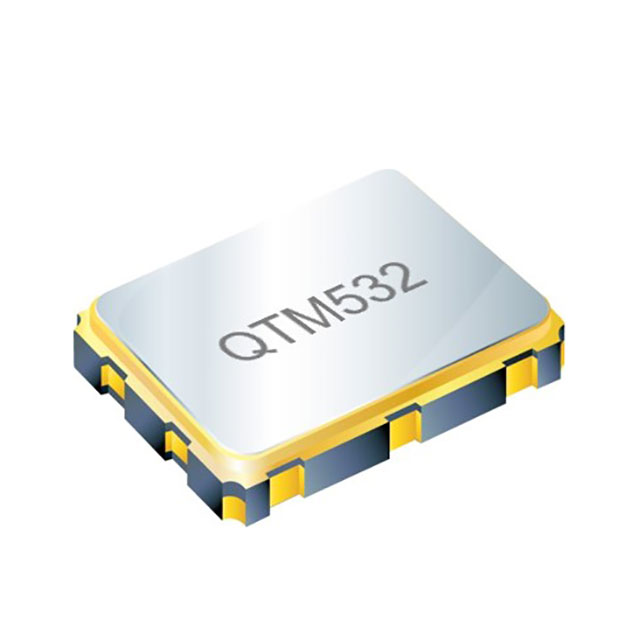
The QTM532-100.000MDE-T is a standard CMOS crystal oscillator manufactured by QST, operating at a frequency of 100 MHz. It features a 1.8V supply voltage and utilizes an Enable/Disable control function for power management. The component is housed in a compact 4-SMD, No Lead package with dimensions of 5.0mm x 3.2mm. It supports industrial temperature ranges from -40°C to 85°C and provides stable clock signals for digital circuits requiring precise timing synchronization.
Verify the specific suffix 'D' indicates the 1.8V supply and enable/disable feature, as variations exist within the QTM532 series. Confirm the manufacturer source is QST rather than other distributors using similar part numbers. Ensure the order quantity aligns with reel packaging requirements if applicable. Cross-reference the datasheet revision date to ensure compatibility with current design specifications.
Select this model when a 100 MHz clock signal is required with low voltage operation. The enable pin allows for dynamic power saving in battery-operated devices. Compare against 3.3V variants if system voltage differs. Ensure the 5.0x3.2mm footprint fits the PCB layout constraints. Verify thermal performance meets the -40 to 85°C operational range for the intended environment.
This component belongs to the QTM532 series of surface-mount oscillators. It shares the same physical footprint and general architecture with other frequencies in the line, such as 125 MHz or 133 MHz variants. The primary distinction lies in the output frequency and supply voltage configuration defined by the alphanumeric suffixes. It serves as a direct replacement for legacy through-hole crystals in modern miniaturized designs.
Direct substitutes include other 100 MHz CMOS oscillators in 5.0x3.2mm packages from manufacturers like TXC or SiTime, provided they match the 1.8V supply and enable pin requirement. Verify that alternative parts support the same industrial temperature range and have compatible drive levels to prevent over-driving the load.
 QTM532-100.000MDE-T
The activity of extra discounts on wholesale prices is in full swing…
Please fill in your contact information and we will send you the latest wholesale price list.