ChipApex | Global Electronic Components Supplier
SEARCH
Search Product
Search Post
— IC芯片 | 连接器 | 传感器 | 被动器件 —
Search productSearch post
— IC芯片 | 连接器 | 传感器 | 被动器件 —
Consult the customer manager about the wholesale price.
consultation hotline:86-132-6715-2157
email:[email protected]
Contact the product manager for consultation. One-stop consultation is available.
Do you want a lower wholesale price? Please send us your inquiry and we will reply immediately.
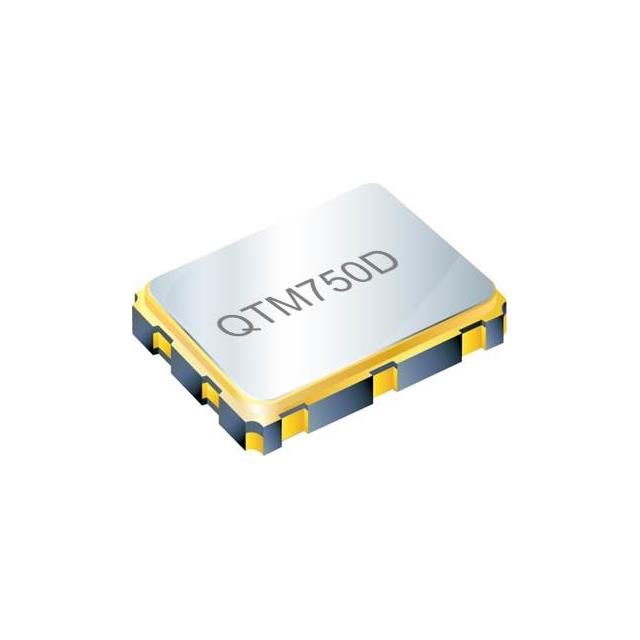
The QTM750D-156.250MBE-T is a quartz crystal oscillator manufactured by QST, operating at a fundamental frequency of 156.25 MHz. It utilizes a surface-mount package designed for high reliability and stability in demanding electronic environments. The device incorporates an internal oscillator circuit to provide a stable clock signal output. Key electrical characteristics include a specified load capacitance and drive level requirements to ensure optimal performance and longevity. The unit is engineered to meet stringent industry standards for frequency accuracy and phase noise.
Verify the specific ordering suffix and package variant against the official QST datasheet to ensure compatibility with your design requirements. Confirm that the load capacitance and drive level specifications match your system's oscillator circuit design. Request detailed test reports or calibration certificates if required for your quality assurance processes. Ensure storage and handling conditions adhere to manufacturer guidelines to prevent damage to the quartz element.
Select this component when a fixed frequency of 156.25 MHz is required with high stability. Consider the physical dimensions and pin configuration for PCB layout compatibility. Evaluate the temperature range and aging rate specifications against your operational environment constraints. Compare phase noise performance metrics if jitter sensitivity is critical for your application's signal integrity.
This oscillator belongs to QST's series of precision quartz devices, typically used in applications where frequency stability is paramount. It serves as a timebase reference for digital circuits, microprocessors, and communication interfaces. The model designation indicates specific electrical and mechanical parameters defined by the manufacturer. It is part of a broader portfolio of timing solutions offered for various industrial and commercial sectors.
Consult official cross-reference lists from QST or authorized distributors for verified substitute part numbers. Ensure any replacement matches the exact frequency, package type, and electrical specifications. Verify that alternative components meet the same reliability and environmental standards. Do not assume pin-to-pin compatibility without confirming mechanical and electrical data sheets.
 QTM750D-156.250MBE-T
The activity of extra discounts on wholesale prices is in full swing…
Please fill in your contact information and we will send you the latest wholesale price list.