ChipApex | Global Electronic Components Supplier
SEARCH
Search Product
Search Post
— IC芯片 | 连接器 | 传感器 | 被动器件 —
Search productSearch post
— IC芯片 | 连接器 | 传感器 | 被动器件 —
Consult the customer manager about the wholesale price.
consultation hotline:86-132-6715-2157
email:[email protected]
Contact the product manager for consultation. One-stop consultation is available.
Do you want a lower wholesale price? Please send us your inquiry and we will reply immediately.
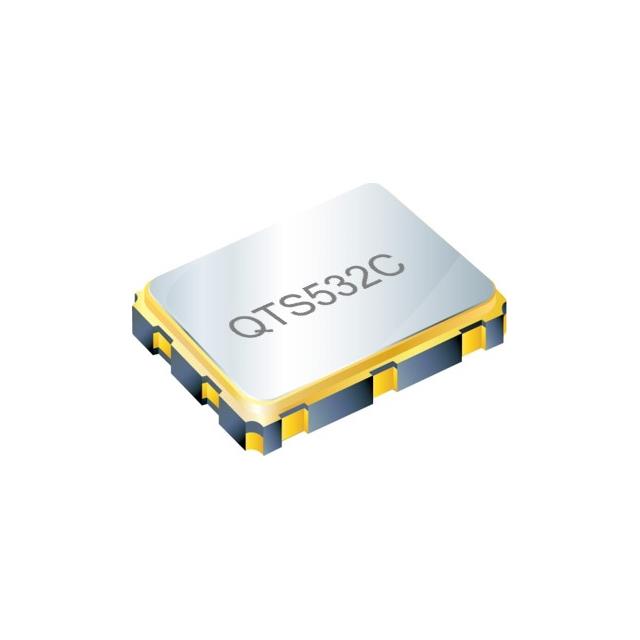
The QTS532C-26.000MBP-T is a temperature-compensated crystal oscillator (TCXO) manufactured by QST, designed for precision clocking applications. It operates at a nominal frequency of 26 MHz with a frequency stability of ±280 ppb. The device utilizes a CMOS output mode and requires a supply voltage of 3.3 V. It is housed in a compact 10-SMD, No Lead surface-mount package, measuring 5.00 mm x 3.20 mm with a seated height of 1.50 mm. The component supports an operating temperature range of -40°C to +85°C.
Verify the specific suffix 'BP' against the manufacturer's official datasheet to confirm pinout configuration and electrical characteristics. Ensure the required frequency tolerance of ±280 ppb aligns with system requirements. Confirm RoHS3 compliance status if environmental regulations apply to the final product assembly.
Select this component when a stable 26 MHz reference is required within a limited board area. The 3.3 V supply voltage suits modern low-power digital systems. Consider the 10-SMD package dimensions for PCB layout constraints. Validate that the CMOS output swing matches the input requirements of the downstream clock receiver.
This part belongs to the QTS532C series of TCXOs from QST, which offers various frequencies and packages. The 'BP' suffix typically denotes a specific package type or pin configuration within this family. Similar models include variants with different frequencies such as 19.44 MHz or 30.72 MHz, sharing similar form factors but differing in electrical specifications.
Direct substitutes may include other QST TCXOs in the same 10-SMD package with compatible frequency and voltage. Verify pin-to-pin compatibility and electrical parameters before substitution. Cross-reference with distributor databases for equivalent parts from other manufacturers offering similar stability and package dimensions.
The QTS532C-26.000MBP-T features a CMOS output waveform.
Official documentation for this specific part number does not explicitly list voltage control functionality; it is primarily a TCXO.
 QTS532C-26.000MBP-T
The activity of extra discounts on wholesale prices is in full swing…
Please fill in your contact information and we will send you the latest wholesale price list.