ChipApex | Global Electronic Components Supplier
SEARCH
Search Product
Search Post
— IC芯片 | 连接器 | 传感器 | 被动器件 —
Search productSearch post
— IC芯片 | 连接器 | 传感器 | 被动器件 —
Consult the customer manager about the wholesale price.
consultation hotline:86-132-6715-2157
email:[email protected]
Contact the product manager for consultation. One-stop consultation is available.
Do you want a lower wholesale price? Please send us your inquiry and we will reply immediately.
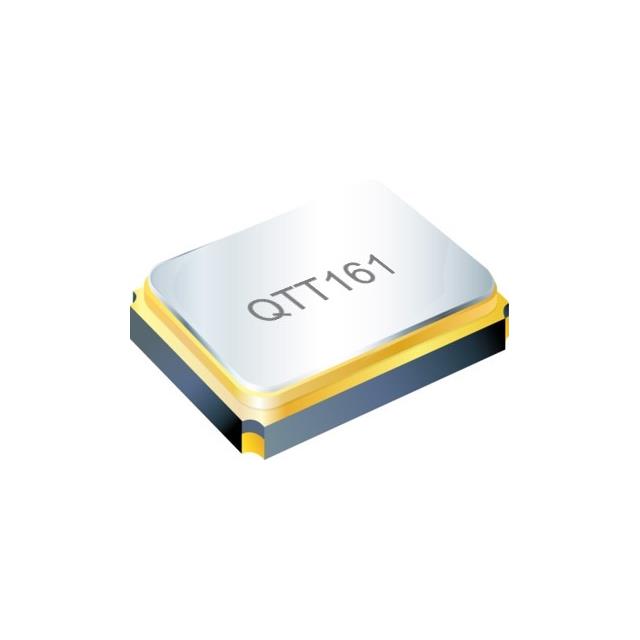
The QTT161-26.000MDG-T is a Temperature Compensated Crystal Oscillator (TCXO) manufactured by QST, operating at a nominal frequency of 26 MHz. It utilizes a clipped sine wave output format and functions with a supply voltage of 1.8V. The device is housed in a compact 4-SMD, No Lead surface-mount package. It draws a maximum current of 2mA during operation. This component is designed for applications requiring stable timing signals within low-power constraints.
Verify the specific output waveform and voltage requirements against your system design before procurement. Confirm that the 1.8V supply rail can support the maximum 2mA current draw without significant voltage droop. Ensure the PCB footprint matches the 4-SMD, No Lead package dimensions to prevent assembly issues. Cross-reference the manufacturer's datasheet for any recent updates regarding pin configurations or recommended decoupling capacitor values.
Select this component when a stable 26 MHz clock source is required in a low-voltage environment. The clipped sine output is appropriate for direct connection to CMOS or TTL inputs without additional buffering. Consider the thermal compensation capabilities if the operating environment experiences significant temperature fluctuations. Verify compatibility with the 1.8V logic levels used in the target application circuit.
This part belongs to the QTT161 series of oscillators from QST. The series includes various frequencies and voltage options, such as 3.3V variants like the QTS750C series. The QTT161 model specifically targets low-voltage applications, distinguishing it from higher voltage counterparts. The suffix indicates the specific frequency and package type within the product line.
Direct substitutes may include other 26 MHz TCXOs in 4-SMD packages with compatible 1.8V operation. Check for equivalent phase noise specifications and current consumption profiles. Ensure the replacement part supports clipped sine output if direct logic interfacing is required. Verify that the thermal compensation range meets the application's environmental requirements.
 QTT161-26.000MDG-T
The activity of extra discounts on wholesale prices is in full swing…
Please fill in your contact information and we will send you the latest wholesale price list.