 ChipApex | Global Electronic Components Supplier
SEARCH
Search Product
Search Post
— IC芯片 | 连接器 | 传感器 | 被动器件 —
Search productSearch post
— IC芯片 | 连接器 | 传感器 | 被动器件 —
Consult the customer manager about the wholesale price.
consultation hotline:86-132-6715-2157
email:[email protected]
Contact the product manager for consultation. One-stop consultation is available.
Do you want a lower wholesale price? Please send us your inquiry and we will reply immediately.
The Radiall R422110030 is a TNC in-line RF attenuator module designed for high-power applications. It provides a fixed attenuation of 10 dB with a 50-ohm impedance across a frequency range of 0 Hz to 6 GHz. The component supports a maximum power handling capacity of 100 Watts, making it suitable for demanding signal processing environments. Constructed with robust materials, it ensures reliable performance and consistent electrical characteristics within its specified operational limits.
Verify the specific datasheet version for the R422110030 to confirm current manufacturing status and detailed mechanical dimensions. Ensure compatibility with existing TNC mating connectors regarding torque specifications and interface standards. Cross-reference the 100W power rating against actual operating conditions to prevent thermal overload. Confirm that the 6 GHz upper frequency limit meets system bandwidth requirements without significant insertion loss variation.
Select this model when a fixed 10 dB attenuation is required at frequencies up to 6 GHz. The 100W power rating distinguishes it from lower-power variants, making it appropriate for high-energy RF paths. The TNC interface dictates the physical connection method, so verify cable or panel mount compatibility. Consider the in-line module form factor for space-constrained assemblies where modular replacement is preferred over discrete components.
This component belongs to Radiall's line of coaxial RF attenuators, specifically utilizing the TNC connector style. It serves as a passive device to reduce signal amplitude without introducing significant distortion. The series is engineered for stability in harsh environments, offering durability through its construction materials. It complements other Radiall interconnect solutions by providing essential signal conditioning capabilities.
Substitutes must match the 10 dB attenuation, 50-ohm impedance, and TNC interface. Verify that alternative models support at least 100W power handling and operate up to 6 GHz. Check mechanical footprint compatibility for direct replacement in existing assemblies. Ensure the substitute maintains similar VSWR and insertion loss characteristics to preserve system performance integrity.
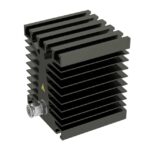 R422110030
The activity of extra discounts on wholesale prices is in full swing…
Please fill in your contact information and we will send you the latest wholesale price list.







