ChipApex | Global Electronic Components Supplier
SEARCH
Search Product
Search Post
— IC芯片 | 连接器 | 传感器 | 被动器件 —
Search productSearch post
— IC芯片 | 连接器 | 传感器 | 被动器件 —
Consult the customer manager about the wholesale price.
consultation hotline:86-132-6715-2157
email:[email protected]
Contact the product manager for consultation. One-stop consultation is available.
Do you want a lower wholesale price? Please send us your inquiry and we will reply immediately.
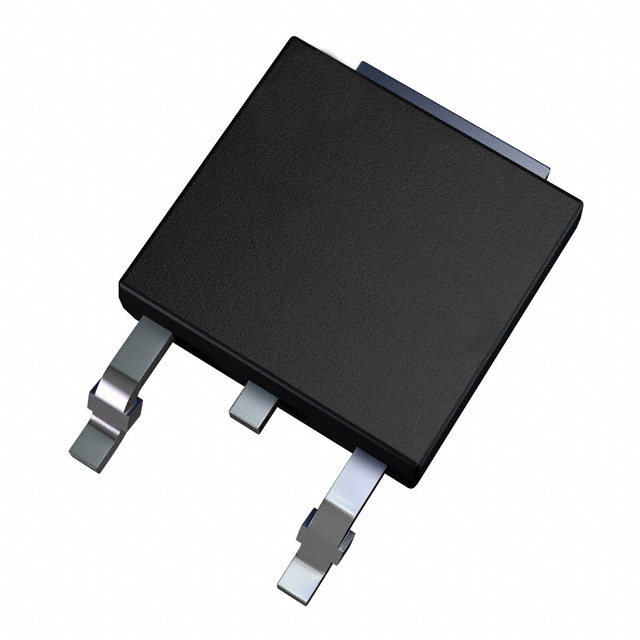
The RB088NS150FHTL is a silicon Schottky barrier diode manufactured by ROHM Semiconductor, housed in a TO-263S (D2PAK) surface-mount package. It features a dual anode common cathode configuration with a maximum repetitive reverse voltage of 150 V and an average rectified forward current rating of 10 A. The device exhibits a maximum forward voltage of 780 mV at 5 A and a maximum reverse current of 15 uA at 150 V. It supports a forward surge current of 50 A and operates within a junction temperature range up to +150 °C. This component holds AEC-Q101 qualification for automotive reliability standards.
Verify the specific ordering suffix against official ROHM documentation to confirm packaging type and reel specifications. Ensure the procurement channel sources genuine components with traceable manufacturing data. Confirm that the delivered parts match the exact part number including all alphanumeric characters to avoid functional mismatches due to minor variant differences.
Select this component when designing circuits that require robust performance under high-temperature conditions where standard Schottky diodes might suffer from excessive leakage current. The dual anode common cathode arrangement allows for bridge rectifier or freewheeling configurations without additional discrete components. Consider the TO-263S package dimensions for PCB footprint compatibility and thermal management requirements relative to the 10 A current rating.
This device belongs to the RBxx8 series of Schottky barrier diodes designed specifically for automotive and industrial applications. The series addresses the inherent limitation of traditional Schottky diodes regarding reverse leakage current increase at high temperatures. By employing specialized blocking metal technology, the RBxx8 series maintains stable electrical characteristics, ensuring reliable operation in demanding thermal environments typical of modern vehicle electronics and power conversion systems.
RB088NS150FH is listed as an alias for this component. Verify pinout and electrical parameters before substitution. No other direct replacements are confirmed in public documentation.
 RB088NS150FHTL
The activity of extra discounts on wholesale prices is in full swing…
Please fill in your contact information and we will send you the latest wholesale price list.