ChipApex | Global Electronic Components Supplier
SEARCH
Search Product
Search Post
— IC芯片 | 连接器 | 传感器 | 被动器件 —
Search productSearch post
— IC芯片 | 连接器 | 传感器 | 被动器件 —
Consult the customer manager about the wholesale price.
consultation hotline:86-132-6715-2157
email:[email protected]
Contact the product manager for consultation. One-stop consultation is available.
Do you want a lower wholesale price? Please send us your inquiry and we will reply immediately.
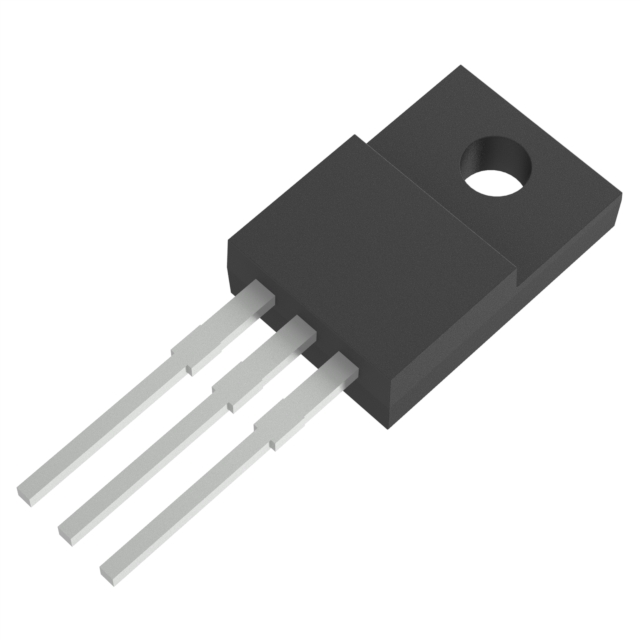
The RB218T-60HZC9 is a Schottky barrier diode featuring a cathode common dual configuration housed in a TO-220FN (3-pin) leaded package. It is qualified under the AEC-Q101 automotive standard for high reliability. The device supports an average forward rectified current of 20A and withstands a reverse voltage of 60V. Key electrical characteristics include a maximum forward voltage of 0.83V at 10A, a maximum reverse current of 5µA at 60V, and a junction-to-case thermal resistance of 2°C/W. Operating temperatures range from -55°C to +150°C.
Verify the specific suffix C9 against official documentation to confirm exact manufacturing lot details or regional compliance variations. Confirm that the component meets all required automotive qualification standards before integration into final assemblies. Ensure storage conditions adhere to manufacturer guidelines to maintain solderability and prevent performance degradation over time.
Select this component for applications requiring a robust, dual-diode solution with low forward voltage drop and minimal reverse leakage. The TO-220FN package facilitates efficient heat dissipation through direct case mounting. Consider the 60V rating and 20A current capacity when designing circuits that demand high surge tolerance and stable operation under varying thermal loads.
This part belongs to the RB218T series of Schottky barrier diodes designed for automotive and industrial environments. The series emphasizes high reliability and low power loss. The RB218T-60HZ variant specifically targets applications needing a 60V blocking capability with a compact yet thermally efficient leaded package suitable for through-hole mounting.
Consult official substitution lists for compatible parts within the same series or equivalent specifications. Verify pinout compatibility and thermal resistance values when replacing components in existing designs to ensure system integrity.
The maximum operating junction temperature is 150°C.
Yes, the RB218T-60HZ is qualified under the AEC-Q101 standard.
The datasheet provides characteristic curves for reverse recovery time but does not specify a single fixed value; it varies with temperature and current conditions.
 RB218T-60HZC9
The activity of extra discounts on wholesale prices is in full swing…
Please fill in your contact information and we will send you the latest wholesale price list.