ChipApex | Global Electronic Components Supplier
SEARCH
Search Product
Search Post
— IC芯片 | 连接器 | 传感器 | 被动器件 —
Search productSearch post
— IC芯片 | 连接器 | 传感器 | 被动器件 —
Consult the customer manager about the wholesale price.
consultation hotline:86-132-6715-2157
email:[email protected]
Contact the product manager for consultation. One-stop consultation is available.
Do you want a lower wholesale price? Please send us your inquiry and we will reply immediately.
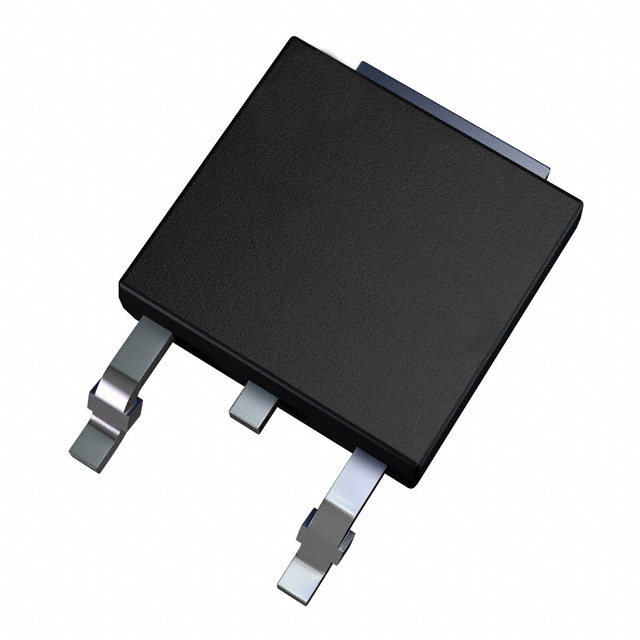
The RBR20NS60AFHTL is a silicon Schottky barrier diode manufactured by ROHM Semiconductor, designed for automotive applications. It features a dual anode common cathode configuration in a TO-263S (D2PAK) surface-mount package. Key electrical parameters include a maximum repetitive reverse voltage of 60 V and an average rectified forward current of 20 A. The device exhibits a typical forward voltage of 590 mV at 10 A and a maximum reverse current of 600 uA at 60 V. It supports a forward surge current of 100 A and operates at junction temperatures up to +150 °C. The component holds AEC-Q101 qualification.
Verify the complete part number including the suffix HTL to ensure correct packaging configuration. Confirm AEC-Q101 compliance requirements match specific automotive design specifications. Check RoHS and REACH SVHC status against current environmental regulations. Ensure thermal management solutions accommodate the specified maximum junction temperature limits during operation.
Select this component when a 60 V rating with 20 A continuous current capacity is required in a D2PAK package. Consider the forward voltage drop and reverse leakage current specifications for thermal budget calculations. Evaluate the dual common cathode configuration against single-diode alternatives for circuit topology compatibility. Verify that the surface-mount footprint aligns with existing PCB layout constraints.
This device belongs to ROHM's RBR series of automotive Schottky barrier diodes. The series emphasizes high reliability and low forward voltage for automotive power management. The TO-263S package provides a balance between current handling capability and board space efficiency. Similar parts in the lineup vary primarily in voltage ratings and current capacities while maintaining consistent packaging and automotive qualification standards.
Cross-reference with RBQ20NS65AFHTL for higher voltage tolerance or RBR40NS60AFHTL for increased current capacity. Ensure pinout compatibility and thermal resistance characteristics match the original design requirements before substitution.
The maximum operating junction temperature is +150 °C.
Yes, the component is qualified according to the AEC-Q101 standard for automotive grade reliability.
The device can withstand a non-repetitive forward surge current of 100 A.
 RBR20NS60AFHTL
The activity of extra discounts on wholesale prices is in full swing…
Please fill in your contact information and we will send you the latest wholesale price list.