ChipApex | Global Electronic Components Supplier
SEARCH
Search Product
Search Post
— IC芯片 | 连接器 | 传感器 | 被动器件 —
Search productSearch post
— IC芯片 | 连接器 | 传感器 | 被动器件 —
Consult the customer manager about the wholesale price.
consultation hotline:86-132-6715-2157
email:[email protected]
Contact the product manager for consultation. One-stop consultation is available.
Do you want a lower wholesale price? Please send us your inquiry and we will reply immediately.
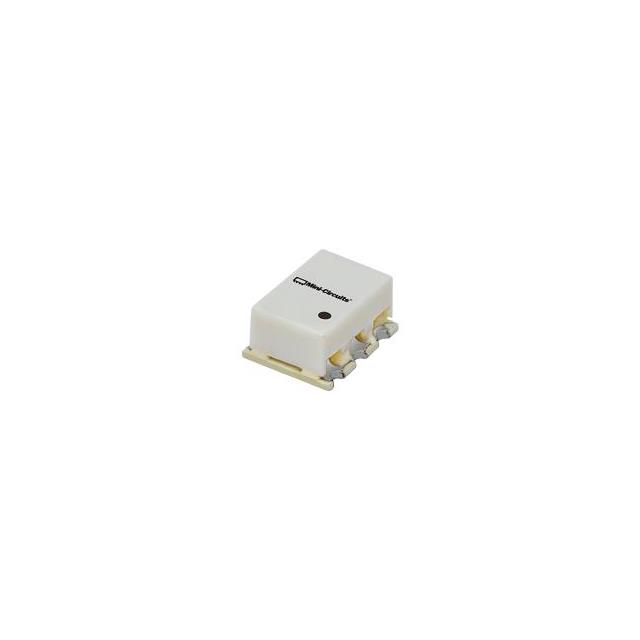
The RCBT-63H+ is a surface mount bias tee from Mini-Circuits, designed for RF applications up to 6 GHz. It provides high DC voltage and current handling capabilities with low insertion loss. The device supports up to +50 V DC voltage and 2.5 A DC current while accommodating RF input power up to +30 dBm (1 W). Enclosed in a compact TT1224-2 package measuring 0.31x0.28x0.07 inches, it integrates DC biasing into RF signal paths efficiently.
Verify the specific datasheet version for the RCBT-63H+ to confirm electrical parameters such as insertion loss and return loss at target frequencies. Ensure the application environment does not exceed the specified +50 V DC voltage or 2.5 A DC current limits. Confirm that the RF input power remains within the +30 dBm maximum rating to prevent device damage. Check compatibility with the TT1224-2 footprint during PCB layout.
Select the RCBT-63H+ when a compact surface mount solution is required for biasing RF components operating up to 6 GHz. This component is suitable for designs needing high DC current handling alongside standard RF signal transmission. Consider the physical dimensions of the TT1224-2 package against available board space. Evaluate if the low insertion loss characteristics meet the system's signal integrity requirements compared to discrete biasing methods.
The RCBT-63H+ belongs to Mini-Circuits' family of surface mount bias tees, which are passive RF components used to inject DC power onto RF lines without disrupting the signal. These devices are commonly found in RF front-end modules and test fixtures where space constraints necessitate integrated solutions over discrete resistor-capacitor networks.
Mini-Circuits offers other models in the bias tee series, such as the RCBT-6+ or RCBT-18+, which may differ in frequency range or current handling. Verify that any substitute part matches the required DC voltage, current, and RF power specifications. Ensure the replacement component fits the same TT1224-2 or compatible footprint to avoid PCB redesign.
 RCBT-63H+
The activity of extra discounts on wholesale prices is in full swing…
Please fill in your contact information and we will send you the latest wholesale price list.