 ChipApex | Global Electronic Components Supplier
SEARCH
Search Product
Search Post
— IC芯片 | 连接器 | 传感器 | 被动器件 —
Search productSearch post
— IC芯片 | 连接器 | 传感器 | 被动器件 —
Consult the customer manager about the wholesale price.
consultation hotline:86-132-6715-2157
email:[email protected]
Contact the product manager for consultation. One-stop consultation is available.
Do you want a lower wholesale price? Please send us your inquiry and we will reply immediately.
The REF3130AQDBZRQ1 is an automotive-grade series voltage reference from Texas Instruments, designed for high precision and low power consumption. It delivers a fixed output of 3V with an initial accuracy of ±0.2% and a maximum temperature coefficient of 20ppm/°C. The device operates within an input voltage range of 3.05V to 5.5V and draws a supply current of 135µA. It supports a load current up to 10mA and functions reliably across a junction temperature range of -40°C to 125°C. Packaged in a compact SOT-23-3 surface-mount case, it meets AEC-Q100 standards for automotive applications.
Verify the specific suffix 'AQ' indicates automotive grade qualification distinct from commercial variants. Confirm the 'R' suffix denotes tape-and-reel packaging suitable for automated assembly processes. Ensure compatibility with standard SOT-23-3 footprints during schematic capture. Validate that the 3V output aligns with system requirements before finalizing procurement orders.
Select this component when automotive reliability and high precision are critical for the application. The 3V output is suitable for single-supply ADCs and sensors operating within the specified input range. Consider the 135µA quiescent current for battery-powered designs where power efficiency is paramount. The SOT-23-3 package offers a small footprint ideal for dense PCB layouts in modern electronic devices.
This part belongs to the REF31xx family of series voltage references from Texas Instruments. The family includes various output voltages such as 1.2V, 2.5V, and 3.3V, all sharing similar low-power and high-precision characteristics. The 'Q1' suffix specifically identifies the product as qualified for automotive use, ensuring compliance with stringent industry standards for durability and performance under varying environmental conditions.
REF3130AIDBZR is the commercial grade equivalent without automotive qualification. REF3130AQDBZRG4 is the lead-free variant of the same automotive part. REF3133AQDBZRQ1 provides a 3.3V output instead of 3V. Verify pinout compatibility and thermal performance when substituting these alternatives.
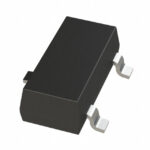 REF3130AQDBZRQ1
The activity of extra discounts on wholesale prices is in full swing…
Please fill in your contact information and we will send you the latest wholesale price list.





