ChipApex | Global Electronic Components Supplier
SEARCH
Search Product
Search Post
— IC芯片 | 连接器 | 传感器 | 被动器件 —
Search productSearch post
— IC芯片 | 连接器 | 传感器 | 被动器件 —
Consult the customer manager about the wholesale price.
consultation hotline:86-132-6715-2157
email:[email protected]
Contact the product manager for consultation. One-stop consultation is available.
Do you want a lower wholesale price? Please send us your inquiry and we will reply immediately.
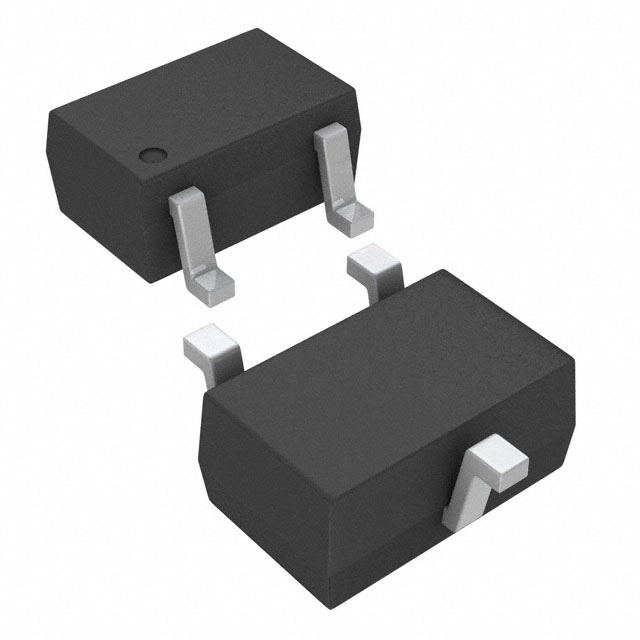
The REF3320AIDCKT is a precision series voltage reference manufactured by Texas Instruments, designed for high-accuracy applications requiring stable output voltages. It delivers a fixed output of 2.048 V with an initial accuracy of 0.15%. The device features a low temperature coefficient of 30 ppm/°C and operates within an extended temperature range from -40°C to +125°C. It supports a maximum input voltage of 5.5 V and offers a maximum shunt current of 5 mA. Power consumption is minimized with a typical operating supply current of 3.9 µA. The component is housed in a compact SC-70-3 surface-mount package, suitable for space-constrained designs.
Verify the specific suffix 'CKT' indicates cut-tape packaging when ordering. Confirm RoHS compliance status through official documentation as required by project specifications. Ensure moisture sensitivity level requirements are met during storage and handling procedures. Cross-reference the manufacturer part number against authorized distributors to guarantee authenticity and traceability.
Select this component when a 2.048 V output is specifically required rather than standard 2.5 V or 3.0 V references. Consider the 30 ppm/°C drift specification against application thermal cycles. Evaluate the 3.9 µA quiescent current against system power budgets. Verify that the SC-70-3 footprint matches the design layout constraints.
This part belongs to the REF33xx family of precision voltage references from Texas Instruments. The family includes variants with different fixed output voltages such as 1.8 V, 3.0 V, and 3.3 V, all sharing similar performance characteristics like low power consumption and high accuracy. The REF3320 specifically targets applications needing the 2.048 V standard often used in ADC/DAC interfaces.
Other members of the REF33xx family, such as REF3318AIDCKT or REF3330AIDCKR, offer identical pinouts and performance profiles but provide different fixed output voltages (1.8 V or 3.0 V respectively). Direct substitution requires verifying that the alternative voltage level meets the circuit design requirements.
 REF3320AIDCKT
The activity of extra discounts on wholesale prices is in full swing…
Please fill in your contact information and we will send you the latest wholesale price list.