 ChipApex | Global Electronic Components Supplier
SEARCH
Search Product
Search Post
— IC芯片 | 连接器 | 传感器 | 被动器件 —
Search productSearch post
— IC芯片 | 连接器 | 传感器 | 被动器件 —
Consult the customer manager about the wholesale price.
consultation hotline:86-132-6715-2157
email:[email protected]
Contact the product manager for consultation. One-stop consultation is available.
Do you want a lower wholesale price? Please send us your inquiry and we will reply immediately.
The REF3425SQDBVRQ1 is an automotive-grade series voltage reference from Texas Instruments, housed in a compact SOT-23-6 package. It delivers a fixed output of 2.5 V with high initial accuracy of ±0.05% and a low temperature coefficient of 6 ppm/°C. Designed for robust performance, it operates within a supply voltage range of 3.5 V to 12 V and supports a maximum shunt current of 10 mA. The device consumes only 95 µA of quiescent current and functions reliably across an extended temperature range from -40°C to +125°C. It holds AEC-Q100 qualification for automotive applications.
Verify the specific suffix QDBVRQ1 matches the required automotive grade and tape-and-reel packaging configuration. Confirm that the 2.5 V output variant aligns with circuit design requirements. Ensure compatibility with the SOT-23-6 footprint during PCB layout. Check for moisture sensitivity level compliance if storage conditions exceed specified limits. Validate supplier documentation against the official Texas Instruments datasheet for accurate part identification.
Select this component when designing for automotive environments demanding high stability and low drift. The 6 ppm/°C coefficient ensures minimal output variation over wide temperature swings. The 10 mA load capability supports moderate current demands without external buffering. Consider the 95 µA quiescent current for battery-sensitive applications. The SOT-23-6 package offers space efficiency for dense board layouts compared to larger packages.
This part belongs to the REF34xx family of precision series voltage references. The 'Q' prefix indicates automotive qualification, while 'S' denotes the SOT-23-6 package. The 'DBV' specifies the thermal pad variant, and 'RQ1' indicates reel packaging. This family provides a balance of precision, low power, and small form factor suitable for modern electronic designs.
Direct substitutes include other AEC-Q100 qualified 2.5 V references in SOT-23-6 packages. Verify pinout compatibility and thermal characteristics before substitution. Alternative families may offer different accuracy or current capabilities but require circuit re-evaluation.
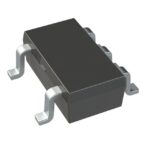 REF3425SQDBVRQ1
The activity of extra discounts on wholesale prices is in full swing…
Please fill in your contact information and we will send you the latest wholesale price list.





