 ChipApex | Global Electronic Components Supplier
SEARCH
Search Product
Search Post
— IC芯片 | 连接器 | 传感器 | 被动器件 —
Search productSearch post
— IC芯片 | 连接器 | 传感器 | 被动器件 —
Consult the customer manager about the wholesale price.
consultation hotline:86-132-6715-2157
email:[email protected]
Contact the product manager for consultation. One-stop consultation is available.
Do you want a lower wholesale price? Please send us your inquiry and we will reply immediately.
The REF35125QDBVR is a precision series voltage reference from Texas Instruments, delivering a fixed output of 1.25 V. It features an initial accuracy of 0.05% and a temperature coefficient of 12 ppm/°C. The device operates with a quiescent current of 650 nA and supports a maximum input voltage of 6 V. It accommodates a maximum shunt current of 10 mA and functions within a temperature range of -40°C to +125°C. Packaged in a SOT-23-6 surface-mount case, it belongs to the REF35 series.
Verify the specific suffix QDBVR against the manufacturer's official datasheet to confirm pinout and electrical specifications match your design requirements. Ensure compatibility with your PCB footprint and thermal management strategy. Confirm RoHS compliance status through the latest product change notifications or official documentation before finalizing procurement decisions.
Select this component when a low-drift, low-power voltage reference is required for precision measurement applications. The 1.25 V output is suitable for driving ADCs directly. Consider the 12 ppm/°C drift specification against your system's thermal environment. The SOT-23-6 package offers a compact solution compared to larger packages, provided thermal dissipation remains within limits for the 10 mA shunt current capability.
This part belongs to the REF35 family of precision voltage references from Texas Instruments. The family includes various output voltages and packages, sharing common architectural features such as low noise and high stability. The REF35125 variant specifically targets applications needing a 1.25 V reference point, often used in bridge sensor interfaces and portable instrumentation where battery life and accuracy are critical constraints.
The REF35125QDBVRQ1 is an automotive-grade alternative within the same series, offering similar electrical characteristics but qualified for automotive environments. Verify if automotive reliability standards are required for your application. Other REF35 variants with different output voltages may serve as functional substitutes if the voltage level can be adjusted or if multiple references are needed.
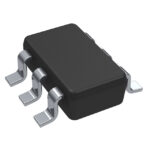 REF35125QDBVR
The activity of extra discounts on wholesale prices is in full swing…
Please fill in your contact information and we will send you the latest wholesale price list.





