 ChipApex | Global Electronic Components Supplier
SEARCH
Search Product
Search Post
— IC芯片 | 连接器 | 传感器 | 被动器件 —
Search productSearch post
— IC芯片 | 连接器 | 传感器 | 被动器件 —
Consult the customer manager about the wholesale price.
consultation hotline:86-132-6715-2157
email:[email protected]
Contact the product manager for consultation. One-stop consultation is available.
Do you want a lower wholesale price? Please send us your inquiry and we will reply immediately.
The REF4132A50DBVRQ1 is an automotive-grade series voltage reference from Texas Instruments, designed for high precision and low power consumption. It provides a fixed 5 V output with an initial accuracy of ±0.05% and a maximum temperature coefficient of 12 ppm/°C (A grade). The device operates within a wide ambient temperature range of -40°C to +125°C and supports an output current of ±10 mA. Key electrical characteristics include a maximum quiescent current of 100 μA in active mode and 5 μA in shutdown mode. It features low output noise of 15 µVp-p (0.1 Hz to 10 Hz) and excellent long-term stability of 30 ppm/1000 hrs. The component is housed in a compact 5-pin SOT-23 package.
Verify the specific suffix 'A50' confirms the 5 V output voltage and 'A' grade indicates the 12 ppm/°C temperature coefficient. Ensure the 'Q1' designation matches your requirement for AEC-Q100 automotive qualification. Confirm the DBVR package corresponds to the SOT-23-5 form factor required for your PCB layout constraints before finalizing procurement.
Select this component when a fixed 5 V reference is required for noise-sensitive automotive data acquisition circuits. It serves as a direct pin-to-pin replacement for LM4128-Q1 and LM4132-Q1 devices. Consider its low dropout voltage and small footprint for space-constrained designs. Evaluate the 100 μA quiescent current against battery life requirements if used in portable applications.
This part belongs to the REF4132-Q1 family of low-drift, low-power CMOS voltage references. The family includes variants with different output voltages (2.5 V, 3 V, 3.3 V, 4.096 V) and temperature coefficients (A grade: 12 ppm/°C, B grade: 30 ppm/°C). All members share the same SOT-23-5 package and functional architecture, differing primarily in their calibrated output voltage and drift specifications.
The datasheet explicitly identifies the REF4132-Q1 as a pin-to-pin replacement for LM4128-Q1 and LM4132-Q1. Verify that the legacy parts meet the same AEC-Q100 qualification standards and thermal performance requirements for your specific application environment.
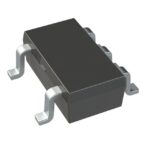 REF4132A50DBVRQ1
The activity of extra discounts on wholesale prices is in full swing…
Please fill in your contact information and we will send you the latest wholesale price list.






