ChipApex | Global Electronic Components Supplier
SEARCH
Search Product
Search Post
— IC芯片 | 连接器 | 传感器 | 被动器件 —
Search productSearch post
— IC芯片 | 连接器 | 传感器 | 被动器件 —
Consult the customer manager about the wholesale price.
consultation hotline:86-132-6715-2157
email:[email protected]
Contact the product manager for consultation. One-stop consultation is available.
Do you want a lower wholesale price? Please send us your inquiry and we will reply immediately.
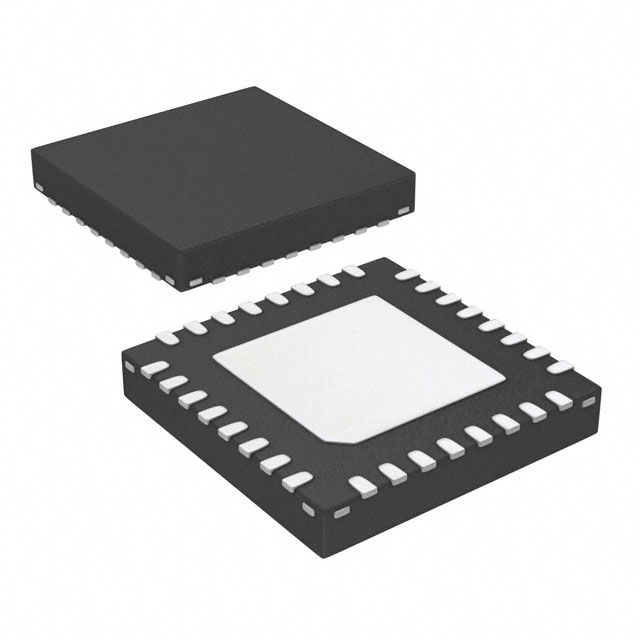
The RFFC2071 is a direct-conversion quadrature modulator designed for IEEE 802.11b/g WLAN applications operating in the 2.4 GHz ISM band. It integrates I and Q baseband inputs, local oscillator input, and RF output stages into a single monolithic GaAs MMIC. The device supports differential or single-ended operation for baseband signals and provides high linearity to minimize spectral regrowth. Key electrical specifications include an LO frequency range of 2.35–2.65 GHz, a conversion gain of approximately 10 dB, and an IP3 of +15 dBm typical. It operates from a single 3.3 V supply with a typical current consumption of 100 mA.
Verify the specific suffix TR13 indicates tape and reel packaging when ordering. Confirm that the device meets RoHS compliance requirements for your target market. Ensure that the PCB layout adheres to the recommended ground plane and thermal dissipation guidelines provided in the datasheet to maintain performance stability. Check for any updated revision notes regarding pin compatibility or electrical tolerances before finalizing the bill of materials.
Select this component for designs requiring a fully integrated solution for 2.4 GHz WLAN transmission without external upconversion stages. Consider its low power consumption and small footprint when space constraints are critical. Evaluate the need for differential versus single-ended baseband interfaces based on the preceding baseband processor capabilities. Ensure the system can provide a clean LO signal within the specified frequency range to optimize noise figure and spurious performance.
This part belongs to Qorvo's portfolio of RF front-end solutions for wireless connectivity. It complements other components such as power amplifiers and switches in complete WLAN reference designs. The technology leverages GaAs MMIC processes to achieve high performance at microwave frequencies while maintaining cost-effectiveness for consumer electronics markets.
Publicly confirmed substitute part numbers are not available in standard documentation. Designers should consult official Qorvo resources for qualified alternatives or next-generation replacements that maintain pin-out and electrical specification compatibility.
The device supports a local oscillator frequency range of 2.35 GHz to 2.65 GHz.
Yes, the device supports both differential and single-ended baseband input configurations.
 RFFC2071TR13
The activity of extra discounts on wholesale prices is in full swing…
Please fill in your contact information and we will send you the latest wholesale price list.