ChipApex | Global Electronic Components Supplier

SEARCH
Search Product
Search Post
Search productSearch post
Consult the customer manager about the wholesale price.
consultation hotline:86-132-6715-2157
email:[email protected]
Contact the product manager for consultation. One-stop consultation is available.
Do you want a lower wholesale price? Please send us your inquiry and we will reply immediately.
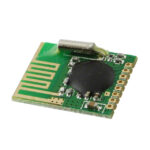
RFM73-S is listed in the RF Transceiver Modules And Modems range at ChipApex. The manufacturer field lists RF Solutions. Its product description is RF TXRX MOD ISM > 1GHZ TRACE SMD. Review the specifications below when checking this part for your BOM.
Request the manufacturer datasheet
Explore related parts through RF and Wireless, all product categories, ChipApex homepage.
The RFM73-S is a compact radio transceiver module based on the Nordic Semiconductor nRF24L01+ integrated circuit, designed for ultra-low power wireless communication applications. It operates within the globally available 2.4 GHz Industrial, Scientific, and Medical (ISM) band, utilizing Direct Sequence Spread Spectrum (DSSS) technology to ensure reliable data transmission in noisy environments. The module supports multiple data rates including 250 kbps, 1 Mbps, and 2 Mbps, allowing for flexible trade-offs between throughput and range. It features an onboard ceramic antenna optimized for the 2.4 GHz frequency, providing consistent radiation patterns without the need for external matching networks. The device integrates a high-performance receiver with low noise amplifier (LNA) capabilities and a power amplifier (PA) for enhanced transmit performance.
Verify that the specific revision of the RFM73-S module matches the required PCB footprint and pinout configuration for your design. Ensure compatibility with the host microcontroller's SPI interface voltage levels, typically 3.3V logic. Confirm that the selected variant includes the necessary decoupling capacitors as per the reference design provided by the manufacturer. Check for any regional regulatory certifications required for the target market, such as FCC or CE compliance documentation associated with the module assembly.
Choose the RFM73-S when a balance between moderate range, low cost, and ease of integration is required compared to larger LoRa or Zigbee modules. It is ideal for point-to-point or star topology networks requiring simple protocol stacks. Consider this module if the application demands minimal component count and proven reliability in the 2.4 GHz band. Evaluate the need for simultaneous transmit/receive capabilities versus time-division duplexing requirements inherent to the nRF24L01+ architecture before finalizing the selection.
RF Solutions manufactures a range of wireless connectivity modules targeting IoT and embedded applications. The RFM series focuses on providing certified, ready-to-use solutions that simplify the development process for engineers. These modules are often used as drop-in replacements for discrete transceiver chips, offering improved RF performance and reduced board space compared to custom designs using bare ICs.
Direct pin-compatible replacements may include other nRF24L01+ based modules from different manufacturers, but firmware and antenna characteristics must be validated. For long-range needs, consider upgrading to LoRa-based modules like the RFM95W, though this requires significant hardware and software changes.
 RFM73-S

The activity of extra discounts on wholesale prices is in full swing…
Please fill in your contact information and we will send you the latest wholesale price list.