ChipApex | Global Electronic Components Supplier
SEARCH
Search Product
Search Post
— IC芯片 | 连接器 | 传感器 | 被动器件 —
Search productSearch post
— IC芯片 | 连接器 | 传感器 | 被动器件 —
Consult the customer manager about the wholesale price.
consultation hotline:86-132-6715-2157
email:[email protected]
Contact the product manager for consultation. One-stop consultation is available.
Do you want a lower wholesale price? Please send us your inquiry and we will reply immediately.
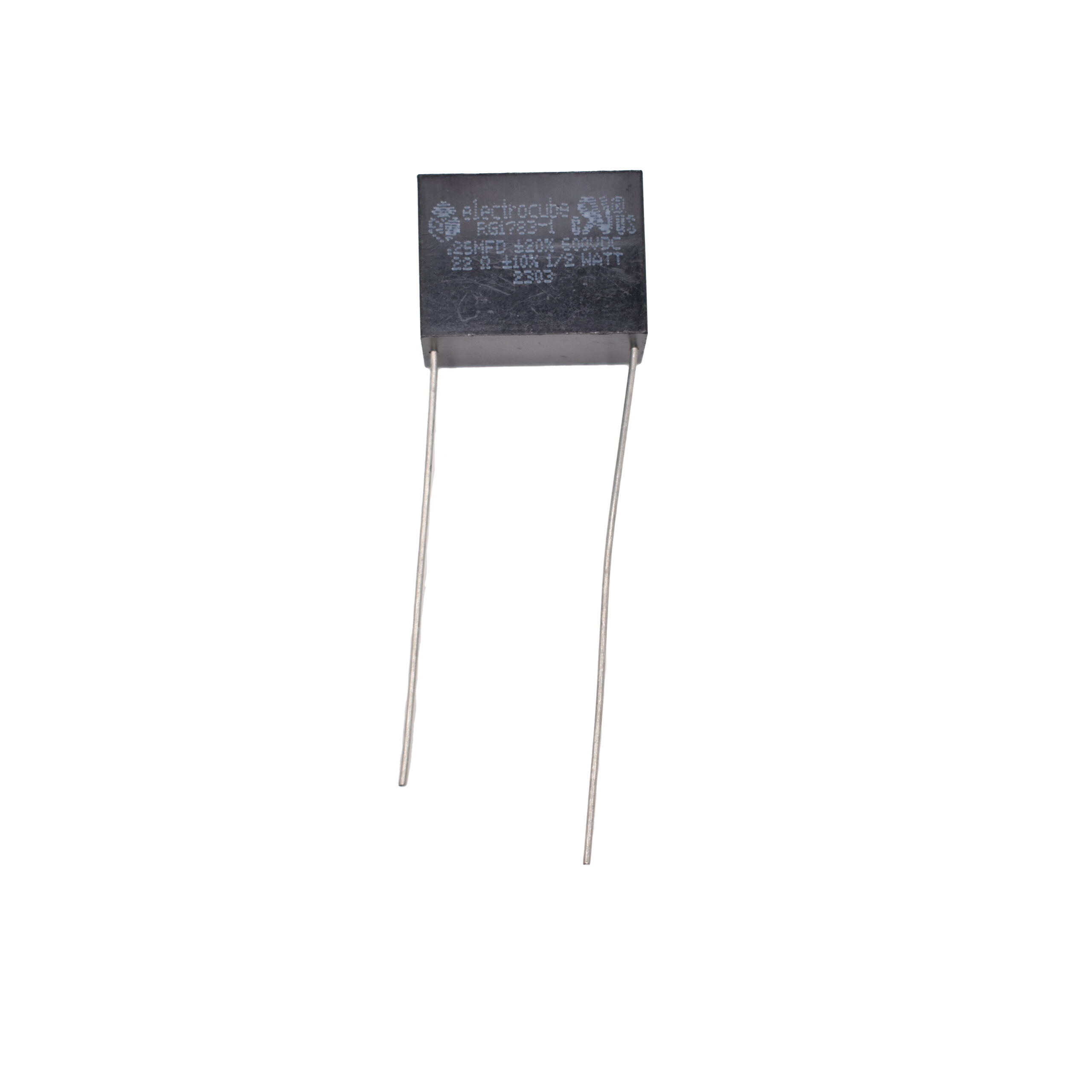
The Electrocube RG1783-1 is a single-phase RC network designed for arc and noise suppression in switch and relay contacts. It features a capacitance of 0.25 microfarads with a tolerance of ±20% and a resistance of 22 ohms. The component has a rated voltage of 600V DC and a pulse voltage rating of 900V. It utilizes #20 AWG tinned solid wire leads and is constructed for PC mount applications. The physical dimensions are 1.000 inches in length by 0.500 inches in width, facilitating compact side-by-side mounting.
Verify the specific lead type and termination style required for your assembly process, as this component uses #20 AWG tinned solid wire leads. Confirm that the 600V DC rated voltage and 0.25 microfarad capacitance align with your circuit's operational requirements. Ensure the radial through-hole package fits within your PCB layout constraints. Cross-reference the manufacturer part number RG1783-1 with official Electrocube documentation to confirm current availability and specifications before ordering.
Select this component when arc suppression is critical for single-phase switching applications involving relays or switches. The 22-ohm resistor value and 0.25-microfarad capacitor combination is optimized for noise reduction without significantly impacting circuit operation. Consider the 600V DC rating for compatibility with higher voltage control circuits. The radial lead format is suitable for standard through-hole mounting techniques on printed circuit boards.
This part belongs to the Electrocube RG1783 series of single-phase RC networks. These components are specifically engineered for heavy-duty use in industrial and commercial environments where contact arcing causes reliability issues. The series offers various capacitance and resistance values to suit different circuit impedances and voltage levels, providing a standardized solution for EMI/RFI suppression in switching applications.
Consult official Electrocube substitution guides for verified alternatives. Generic RC networks may not match the specific pulse voltage ratings or lead configurations required for reliable performance in high-stress switching environments.
 RG1783-1
The activity of extra discounts on wholesale prices is in full swing…
Please fill in your contact information and we will send you the latest wholesale price list.